Thoughts on Japan

After a trip I write what my thoughts are on the country we visited. Japan was a tale of three separate parts.

Japan is made up of 6,852 islands although the four major islands Honshu, Hokkaido, Kyushu and Shikoku account for 97% of the population. The population of Japan is 123,103,479 and is declining. The population is aging, almost 30% of the population is over 65. In Canada the population over 65 is approximately 19%. However, in Canada the population is not declining.

There are a lot of cars, trains, taxis and bicycles in Japan. Cars are small and often look like the car a kid would draw – little boxes. Of course, everyone knows about the Shinkansen Train, however, there are local trains that are less expensive and are prolific. I would say that most towns have a train station, and the trains are clean and run regularly. The local trains run every 15 minutes to 30 minutes. The Shinkansen travels from major city to major city and on some routes runs every 15 to 20 minutes. If you want to take your bike on a train it has to be in a bag. These are called Rinko bags, and the bike must be dismantled to fit in one of these bags. At the very least the front wheel must come off. We had our full-sized folding bikes and were able to fold the bike quickly and put them in the bag that we had purchased prior to leaving Canada. Taxis are expensive but incredibly clean. The drivers all wear a uniform. Bicycles are everywhere in towns and cities. They are used to get to work, to go grocery shopping and transporting children. Approximately 75% of them are ebikes. Road bikes were few and far between. Apart from the Shinamikaido, there was only one other day (on the Lake Biwa Route) that we saw over 20 road cyclists. Apart from that we maybe saw one road cyclist every couple of days. We only met up with two other touring cyclists, a couple from Brazil and a couple from New Zealand.

Hotels were clean and not too expensive except on the weekends and then the price would go up. The hotel rooms were quite small and often the double bed would be against a wall. At most hotels the bikes would be allowed in the room so long as they were in a bag. Approximately 7 of the 30+ hotels we stayed at allowed us to take the bikes into the room without having to put them in a bag or had a safe place to keep the bicycles.

For the most part the country is very clean. We saw very little garbage. This is surprising as there are no public garbage bins. You are expected to take your garbage home with you. When we ate at a 7/11 or Family Mart for lunch we would take our garbage back into the store and there would be bins available.

The garbage collection in smaller towns was interesting in the fact that there were mesh/net containers where you would put your plastic garbage bag. There was often a note stating that you should ensure that the bag was closed as crows would get into the bag and cause a mess. Often there was a broom and pan to sweep up the mess, near these mesh nets.

Recycling was limited to plastic bottles and glass bottles. Almost everything else was put into a bin designated as combustibles. Seventy percent of Japan’s waste is incinerated.

Public toilets, aways something that touring cyclists need, were very clean. We used the ones at the 7/11, Family Mart and Lawsons convenience stores. All the toilets had bidets as part of the toilet seat and a lot of the seats were heated. Who knew you needed a warm bottom while using a public facility. The funniest thing was some of them had a sensor in the seat so that when you sat on it, birds would start tweeting, this was to disguise the noise of you using the toilet.

The food was good, and not too expensive to eat out. The best deal was the “set meal” which would include, salad, protein, rice and vegetables all in small dishes. Of course, there was sushi. I had to be careful of the sushi as I am allergic to shellfish. We were in one grocery store, and we were trying to check the ingredients. A security person came up and told us not to take photos. Ralf explained we had to check the ingredients as I was allergic. He proceeded to help us make sure that there was no shellfish in the items we were looking at.

Eating while you are walking is discouraged. If you were in a market where food was available, it was frowned upon for you to walk and eat at the same time. This was to prevent you from brushing against someone else and spilling your food on them and that food would not spill on to the floor and make a mess.

Smoking was quite common, although we didn’t see anyone walking and smoking. There were smoking rooms outside of train and bus stations and office buildings.

I would say that Japan is a very rule-based country. There are no rules with regards to giving a cyclist room when passing. However, in 2026 the government is looking at regulating cars passing cyclists and have not decided whether it will be 1 metre or 1.5 metres. When that rule is passed it will be safer to ride in Japan.

When a vehicle is making a left turn, they have to give way to pedestrians and cyclists that are crossing. It was easier for us to go on the sidewalk at intersections as the cars would not cut us off when they were making a left turn. However, if we were on the road they would pass us before the intersection and then have to wait until we went through the intersection.

We were told that theft is very rare (more prevalent possibly in big cities). We would leave our fully loaded bikes in the parking lots of castles or near the entrance to the castle. We only had small locks with us, that could easily be cut through with a pair of nail scissors!!  Nothing was ever removed from our bikes.

While I was in hospital Ralf was coming to see me and his phone fell of his bike, he heard something drop but did not realise it was his phone. When he realised it was not attached he went back a couple of blocks where he thought it might be. Only two people had passed him, a fella on a scooter and an older lady on a bicycle. He was upset when he got to the hospital. Fortunately, Mr. Oichi was in the room when he arrived. Mr. Oichi phoned the local police station, gave them a description of the phone. Ralf and I looked at each other both thinking what are the chances of it being turned into the local police. We were fully prepared in the possibility of having to buy a new phone. I asked Mr. Oichi what the chances were of the phone being handed in to a police station, and he responded with “Japan people do not steal” No finders keepers’ mentality here.

I had to go to physio and Ralf was packing his things and chatting to Mr. Oichi. When I returned there was a note from Ralf, someone had handed his phone in at the police station. We were gobsmacked. At the police station he had to prove he could open the phone, and he was given his phone back.

Everyone I spoke to prior to going to Japan told me I would love Japan.

The first two weeks I can honestly say, we didn’t know what all the fuss was about. We found the cycling to be horrendous, the hotels were not accommodating of cyclists and the people in general were not very friendly.

For example, the first day of cycling I suffered from heat stroke. I was lying on the sidewalk trying to cool down,. Ralf had come back down the hill to push my bike up and then came down again to help me up the hill. Several people passed me, some on motor-scooters and others in cars, not one person stopped to see if I needed help. We found a shaded area, I was again sitting down trying to cool down. Not one person asked if I was o.k. This is a first time on any of our bike trips, where no-one offered assistance. In other countries people have always stopped and offered assistance, even if we were only checking on the map for directions.

When I tried to shove Ralf in front of a moving train, and he went over the small wall and the barrier came down on my head. A man got out of his car, but as soon as he realised that the barrier was not stuck he got back in his car. Ralf was bleeding, no-one stopped to assist.

There didn’t appear to be any human connection. Most of the restaurants were automated. On entering the restaurant, you ordered your food at a machine, sat down, and the food would be delivered to you, by a person and on one occasion a robot.

Our first two weeks cycling left a lot to be desired. We went from City to City with very little green space in between. One concrete jungle after another. The Pacific Coast Cycle Route was hit and miss, sometimes you could follow the route and other times the signs disappeared, and you had to work out where you had missed the directional sign or turn.

The further south and west we went away from Tokyo the more enjoyable it became.

At about Day 10 my itinerary took us to more castles and away from the Pacific Coast cycle route. After that we were visiting castles or being tourists almost every day. The castles were amazing and the cycling improved, although the adherence to the rules of not checking into a hotel before 3:00 remained steadfast. Also, I had been led to believe that hotels were very accommodating to cyclists. This only applied to specific areas Lake Biwa and the Shimanikaido cycle routes.

I had been reading that Japan was getting overwhelmed by tourists and were not as welcoming as in previous years.  That certainly appeared to be true.

The last two weeks should have been more sight-seeing days. However, as previously written I spent them in hospital and Ralf stayed in a hostel.

This is when our opinion of Japan changed. The care I received in hospital was amazing. Ralf went to see the castle in Matsuyama and the shrine and other things that were not on the regular tourist itinerary. Ralf was visiting a shrine and noticed a lot of children dressed in traditional clothing. He asked one family what was happening, and they told him all about the 3, 5 7 traditions of blessings.

The owner of the hostel was very kind to Ralf. On the day I was to be released from hospital Ralf asked the owner if he would take him to the hotel in his van with the bikes that were already boxed. Ralf offered to pay him, but he would not accept any payment.

The staff at the travel agent was so helpful to Ralf when he was booking tickets from Matsuyama to Tokyo, ensuring that I had wheelchair assistance to the seat and from the seat.

Would we recommend cycling in Japan. Probably not, unless you only do specific routes – Lake Biwa and the Shimanikaido. I would suggest cycling Shikokou but only if you are really comfortable cycling in traffic.

Would we recommend going to Japan to see the sights Kyoto, Osaka, Tokyo, and castles, yes probably. However, I would say that interaction with Japanese people is limited. We met one English fella who loved Japan, because you don’t have to speak to anyone!! You can order by machine, you can book hotels on-line, you can get your train tickets from a machine.

When we go to a country we like to interact to find out from the population what it is like to live in their country. We didn’t get any interaction like that in Japan.

Would we go back? Although we missed out on a few things I am not sure I would go back to Japan.
Japan Healthcare

Wednesday October 15, 2025 until October 26, 2025

I never thought I would ever have to use our Out of Country Health Insurance while bike touring. When we went on our world trip we purchased Nomads Insurance for two years. Nomads was the only Insurance company that would insure you for a year and then you could renew it every six months. We never had to use it, not a scrape.

After we got re-settled in Canada, Ralf signed up for the Public Service Health Care Insurance, he was eligible because of his Military Service. It has covered us for dental, massages etc. I never thought we would have to use it for something serious, like surgery.

As you read in yesterday’s post I had a bad accident on my bike and was taken to one of the hospitals in Matsuyama.

Thank goodness we had the coverage. The Insurance Company responded very quickly to Ralf and the hospital, confirming treatment and payment direct to the hospital. They have been excellent throughout this ordeal.

I had surgery on a broken ankle and a broken clavicle, both required pins/plates in the bones. The care I received has been amazing.

Although I must admit on the day of surgery, (Thursday October 16, 2025) when I was being prepped for surgery I felt more like a carcass than a living, breathing human being. At about 10:00 I was taken to the shower room, I was transferred to a metal table without much ceremony and stripped naked. I was showered down, hair washed, soaped and scrubbed (the road rash and wounds had been cleaned on admission to ER), patted down and redressed in a gown ready for surgery. I am convinced my sister-in-law’s Golden Retrievers get better treatment at their doggy day spa.

Later one of the nice orderlies cut my fingernails and toenails, not sure why, but it is on the list of instructions if you have surgery in Japan. We laughed about the manicure and what colour nail polish to put on.
At 1:00 a drip was put in and I was wheeled away to the operating theatre. I was scared and I wished Ralf could have been with me in the morning. They told him he could visit at 5:00 p.m. which was outside of regular visiting time.

When I woke up I didn’t have a boot or cast just a large piece of gauze and tape covering the ankle wound and shoulder. I also had my wonderful husband waiting in the room, with a relieved look on his face. That night I was woken every couple of hours to check my blood pressure, temperature and oxygen levels. No machine beeping away, a nurse coming in every couple of hours to check up on me and ask if I had any pain. A kind person, who cares about you and how you are feeling. I was told to press the call button at any time, if I needed anything. They put it close to my pillow so that I could reach it, if I needed to call a nurse. When I pressed it, the nurse was there within a few minutes. The third Japanese word I learnt was Itae – pain!

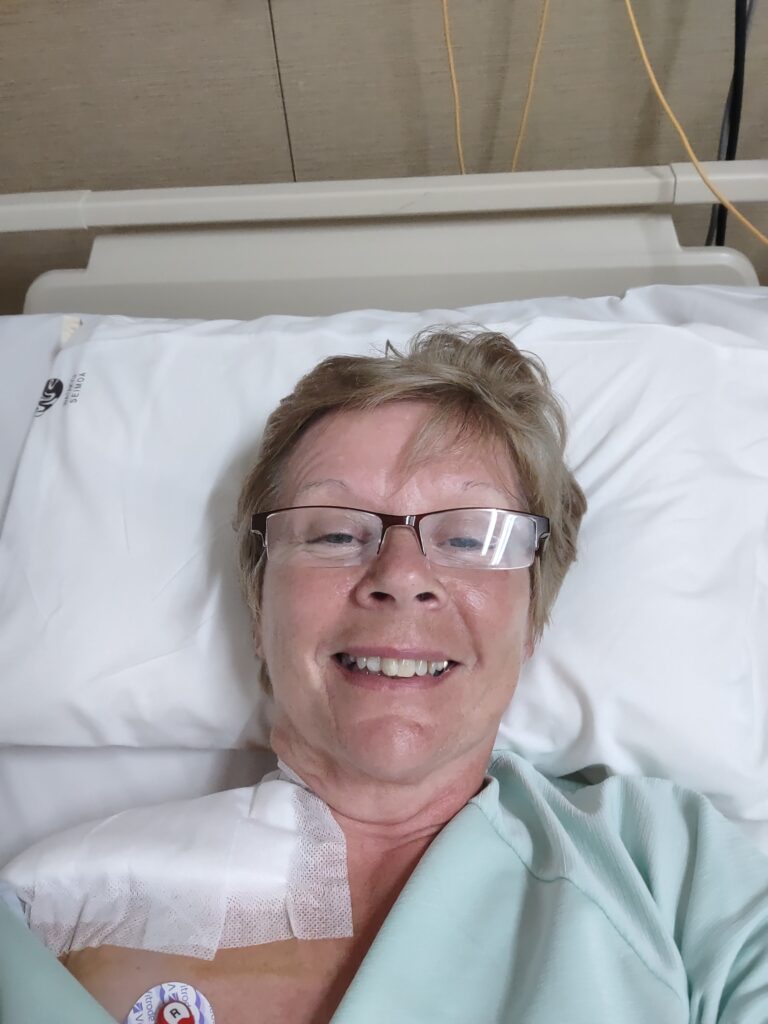
Selfie after surgery

There are certain things you cannot do when you have surgery on your right clavicle as it is very painful to move that side of your body. One of them is cleaning your teeth, brushing your hair, and using chopsticks. Please try brushing your hair with your non-dominant hand. It feels so weird, doesn’t it?

When they bought some food to me, they asked if I could use chopsticks. Yes, I said confidently, then indicated not with this hand (my left). They smiled and bought me a spoon.

Nurses The nurses have been amazing, so kind and caring.

I asked one of the nurses how long it took to become a nurse. She told me three months! That seemed rather short. Then she explained that before working at a hospital she went to vocational school to train to be a nurse. Similar, to Canada where you can get a nursing degree at a community college and then get a BSc at a University. The three months is the training in the hospital. They have a lot of responsibility, but there is a lot of nurses working on this ward. I think there are about 10 private rooms, and 10 rooms with 4 beds in each room. Approximately 50 patients and about 8 – 10 nurses working at any given time, plus orderlies who bring the food and ice-packs. When I was admitted there were a lot of empty beds. At the second emergency rotation almost all of the beds were taken.

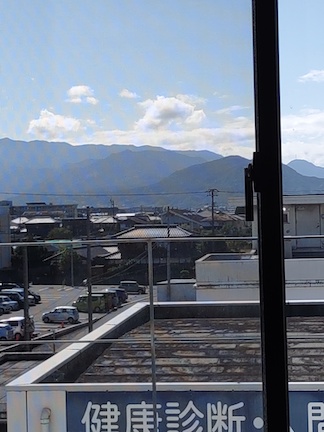
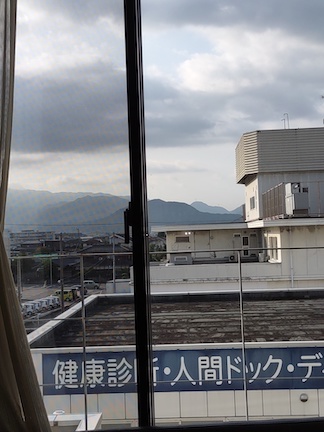
Room with a view

The hospitals in Matsuyama rotate the day of the Emergency intake. The hospitals are on rotation every 8 days. I am not sure what the other hospitals are like, but I cannot complain about the care I have received here.

Physiotherapy

The hospital started physiotherapy on my ankle and shoulder the day after surgery.  Gently moving both ankle and shoulder and massaging the muscles.  At the end of my first session the physio asked if would like to go outside. I thought it a bit strange but said yes. He wheeled me outside and it felt so good to see trees and the little garden. I cried, it was so kind of him.

Over the next week, the physio became more intensive. After a few days I was able to wheel myself to the washroom and eventually after a week allowed to have a shower on my own.

The surgeon indicated that it might take a while to get full mobility back in my shoulder. After one week my shoulder is almost back to normal. Normal is 180 degrees, mine is 170 degrees!! When the physio did the measurements after about the third day, she exclaimed with an OOOhh. I asked if that was a good Ooh or a bad ooh. No, she said very good ooh. Very good.

After a couple of days of physio, the insurance company did not want to pay for the additional physio only if it was part of the acute care. The hospital indicated to them it was part of the acute care and I was able to carry on. Although I would have carried on with the exercises, I don’t think I would have this much mobility in my shoulder and ankle if it wasn’t for the intensive physiotherapy that this hospital has given me.

They had me using crutches, but they hurt my shoulder when I used them for too long. I could walk about 10 feet before it bothered my shoulder. We purchased a pair to be able to adjust them properly and take them back to Canada with us, so that I can get around the house. They were only $40.00, and they are my souvenir from Japan.
As I mentioned before the care has been amazing. The nurses and I have a little chat, using google translate when they come in to take my blood pressure in the morning and the evening. Google translate has been working well most of the time. They teach me one new Japanese word every day.

Itae – pain; Gen ki des – How are you; Watashwa gen ki – I am fine; Oishi – delicious; Oishi ku ny – not delicious; onaka su e ta – hungry; Gam bad y ma su – I will do my best

Lost in Translation

We used google translate a lot.  However, there were times when the nurses or doctors used google translate, the pronouns got confused. Often when they were telling me that I am going to do something, for instance the day of the surgery, the nurse translated “you are going to surgery at 1:00”, it translated as “I am going to surgery at one o’clock” I wondered why she was going to surgery when I was the one with a broken ankle and clavicle. I just said yes.

The funniest translation was “the anaesthetist will anaesthetize himself”. I wasn’t sure that was a good idea, because I really wanted to be asleep during these procedures.

A few days later when I asked about having a shower. Translate indicated that “I was going to have a shower tomorrow.” Seems right but it was on the nurses phone so it would appear that she was going to have the shower, not me.

Also when I was taken to have x-rays and they had to leave me to make sure the room was ready, they would say wait here. It made me smile, I wasn’t about to hop off the bed and leave.

Middle names confuse the Japanese

I have been called Jacqueline or Rosemary or Mrs. Winter. On Saturday at physio the physiotherapist asked me to write down my full name. Jacqueline Rosemary Winter. Jacqueline first name, Rosemary middle name, Winter family name. “So, we call you Rosemary it is a very beautiful name”. No, my first name is the one I use. I explained that in Canada and Europe most people have a middle name usually to remember another relative. Rosemary was my grandmother’s name – not quite true but easier to explain than the Mary part of it was grandmother and the Rose came from nobody in particular. Combine the two and it is a very beautiful name.

As the physio session was coming to an end, she got on her phone and chatted to somebody about my names and the reasons behind a middle name. Now I only get called Jacqueline.

Food

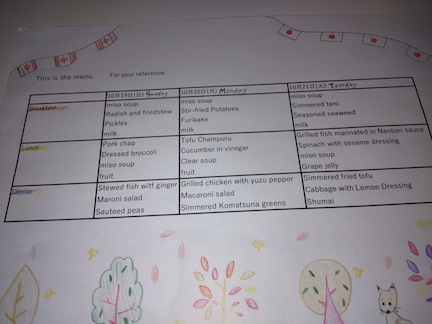
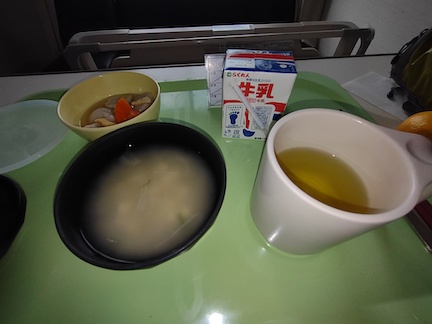
I cannot say that the food has been inspiring, is any hospital food? At first I was getting a bowl of sticky rice with every meal, including breakfast. I could not eat it and felt bad for wasting the food. They asked if it would be better if the rice was in balls, I said sure. Nope, 6 balls of sticky rice 3 x a day was still too much for me. Eventually we stopped with the rice all together. I was served miso soup twice a day, breakfast and lunch. The night nurses prepared a copy of the menu for me in English and decorated it with the Canadian Flag and and the Japanese Flag. Simple, but very kind gestures.

I don’t think I gained any weight in hospital, but I am not starving so the balance of protein and vegetables and miso soup seemed to be working. I am looking forward to some food with a bit of spice to it when I get home.

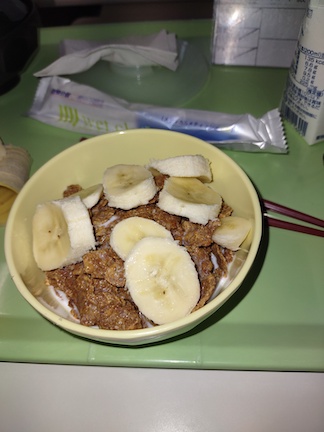
Ralf was allowed to bring me some fruit and cereal which I added to the breakfast of miso soup and vegetables.

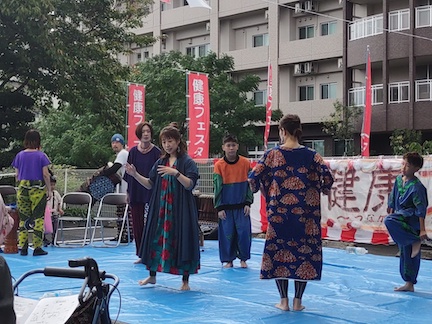
Sunday October 26, 2025. was Health and Fun day at the hospital. The hospital grounds had vendors, food and entertainment for the kids. There were several performances on the “main stage”. One of the nurses came and asked what I would like to see and showed me the schedule of performers. We went down to watch African Drum and Dance performed by a Japanese troupe. I also watched people playing a flute like instrument called an ocarina they sounded a little like Pan flutes. Very peaceful and relaxing. We had a little wander around the exhibits and then into the rehabilitation room (physio) not to have any physio just to see some of the equipment. There was a machine that measured your strength. I had a go and both hands measured the same, I could push 20 kgs.

My nurses treated me to some mochi cake and showed me how to eat it – heated, with soy sauce and sugar. I will miss these kind, caring people.

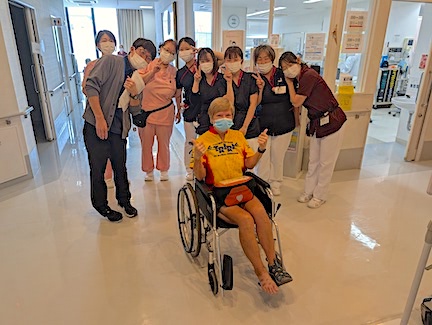
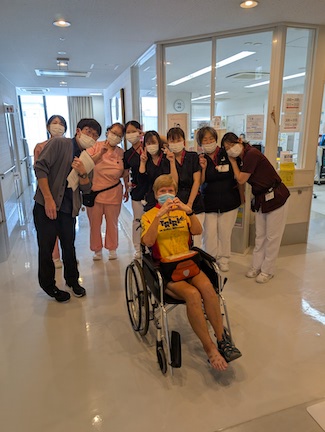
I was discharged on October 27. I was asked what time I wanted to leave! The hotel check-in was 3:00, I asked if 2:30 would be o.k. At 2:00 my favourite nurse, Tomoko, came in with information from my surgeon to be given to the Doctor’s in Canada and a supply of painkillers. Mr. Oichi came to say goodbye and take us downstairs. He had ordered us a taxi and waited with us until it arrived.

The nurses were there to say goodbye to me. I had prepared a little speech for them and Mr. Oichi translated it for me.

Thank-you for looking after me so well.

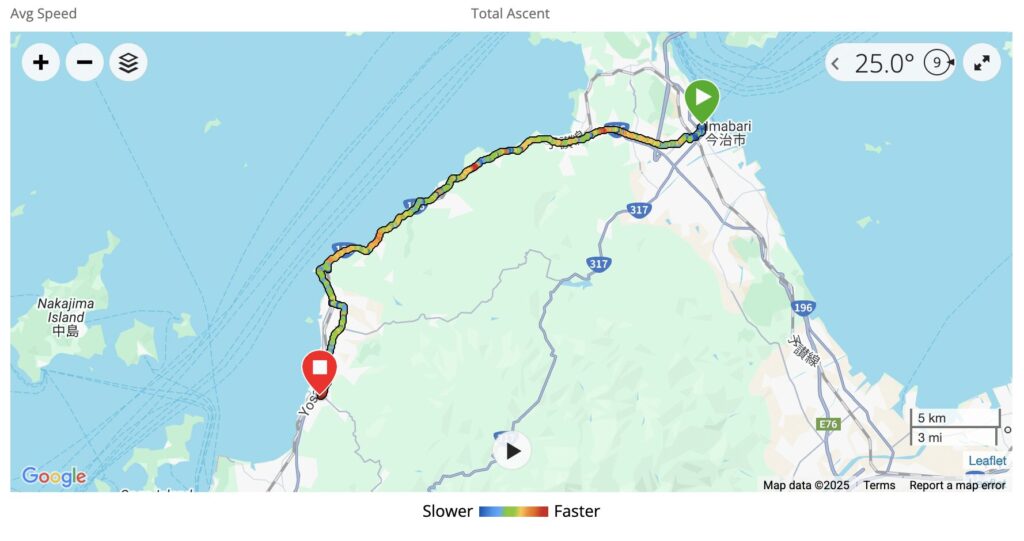
Imabari to Matusyama Hospital – 34.95 kms

Tuesday October 14, 2025

Yes folks you read that right I had my very first trip in an ambulance.

First, how the day went. We left the guesthouse in Imabari, after a good breakfast of boiled egg, ham, avocado and toast and coffee.

The fella we met last night was already in the common room and was spread out everywhere. His suitcase which he had kept in a locker was open and everything was all over the place. I am sure the lady at the reception desk was horrified. I asked if he was this messy at home. He said “yes, but my wife cleans up after me”. He asked me if I knew about Instagram. I said yes then spent the next half hour showing him how to upload pictures etc. His granddaughter had set it up for him, but he didn’t know how to use it, even with the help of ChatGPT.

We got the bikes out of the garage and went back to the train station to begin following the Blue Route around the Island of Shikokou.

Although it is a designated cycle route to explore the Island of Shikoku it was not always a safe route. Ralf and I are very comfortable cycling in traffic, but some Japanese drivers do not give you any room when passing. They may slow down and wait until it is safe to pass, then close pass you, it is quite scary.

Several times we took the sidewalk/multi-use path. The path was wide enough to cycle and gave pedestrians sufficient room.

We were heading to Matsuyama for a rest day and another castle visit. The scenery was quite nice, mostly along the coast with some minor hills for good measure. 

We stopped for lunch and a fella asked where we were headed and where we had come from. When he came out of the store, he gave us two yogurt drinks for good energy. That was kind of him.

About 15 kms short of Matsuyama disaster struck.  A bug landed on my face and crawled inside my glasses. I took my glasses of to shake it off, but the bloody thing decided to stay on my face and crawl towards my eye. I was going about 18 kph at this point. I slowly applied the brakes and veered towards the guard rail, I over corrected and of I went onto the ground. I hit the ground hard and screamed and writhed around a bit. The problem with the Montague brakes is that over time – about 500 kms they become slow to grip, even though they are disk brakes. Then they decide to grip and stop you very quickly.

Ralf came back and asked what happened. I was still moaning, he glanced at my foot and his face went white. Which was odd considering the lovely tan he has. Anyway, he told me not to move and disappeared. It seemed to be a long time before he came back, but it was probably only a few minutes. He came back with a lady who took one look at my ankle, she also went white, she made soothing noises and they both told me the ambulance was on the way. She kept trying to encourage Ralf to take the bikes back to her office, but he wanted to wait until after the ambulance arrived.

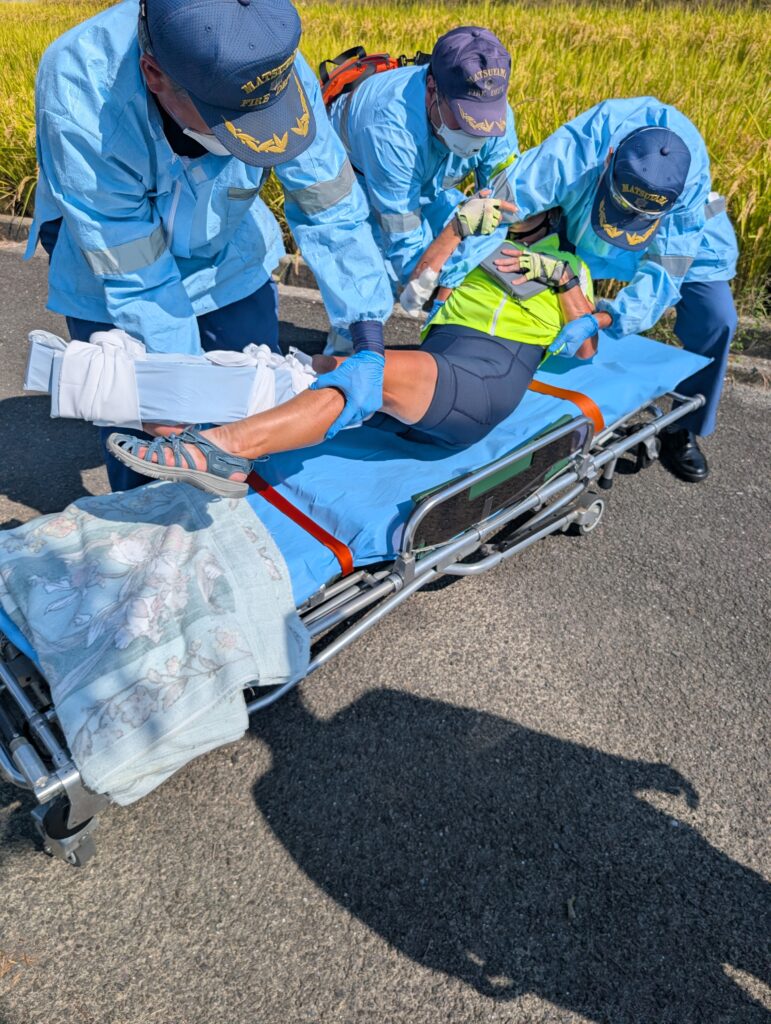
When the ambulance arrived, one of the attendants made a splint for my foot/leg and asked where else it hurt, my shoulder hurt. They cleaned the road rash and put a bandage on my elbow. They not so very gently put me on a stretcher and put me in the back of the ambulance.

Ralf had our handlebar bags in the ambulance which had all the pertinent information including insurance cards. The police arrived they asked if we had bicycle insurance. Apparently, if you ride a bike in Japan you are supposed to have bicycle insurance. We said we didn’t have Japanese Bike Insurance but we had medical insurance, that seemed to keep him happy. Ralf asked why we weren’t going to the hospital. They had to check which hospital was on-call for emergencies that day. Eventually we headed to the hospital. It was a bit of a bumpy ride, sirens going and the attendant apologizing for every bump we went over.

At the hospital they gently moved me from the stretcher to a bed. They checked me out, cleaned my road rash wounds again and told me the orthopedic surgeon would be here soon. That didn’t sound good.

I was taken to x-ray, I could see the x-rays as they were taken. oooh that didn’t look good. A break in my shoulder and a break in my ankle/foot.

When the orthopedic surgeon arrived, he looked about 16, then I thought about Ralf’s niece who is in her first-year residency as a doctor, and she looks about 16 as well!! Maybe it is a sign of age, when you think policemen and doctors look really young. Surprisingly, no-one spoke sufficient English to be able to tell us what was happening. Then Mr. Oichi arrived, he is an administrator who could speak English.

The Ortho surgeon asked if he could mend my foot. I said yes of course, thinking this was going to be under anaesthetic or something. Nope he had hold of my foot, the nurse had hold of my leg and they pulled and manipulated it there and then. I wasn’t expecting that, Ouch that hurt. He put a warm cast around it and it was strapped to keep the “adjustment” in place until later.

Ralf went to retrieve the bikes and take them to the hotel we were booked into that night, then came back to the hospital.

I was told I would be admitted, and surgery would be performed next week. Later they came back and said I would have surgery on Thursday. Pins and plates in both shoulder and foot/ankle, about a two-hour surgery.

My shoulder hurt more than my foot.

So that is the end of our cycling trip of Japan.
This was written about a week after the accident and posted when I got home.

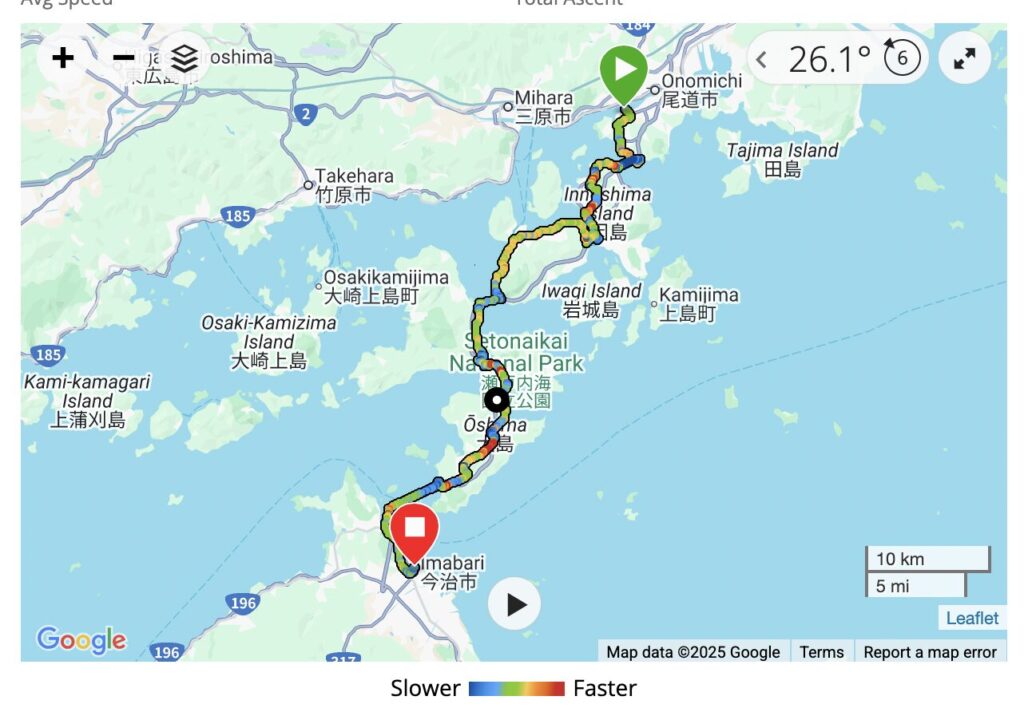
Mukaishima to Imabari 76.68

Monday October 13, 2025

I had read so much about the Shimanami Kaido and was so hoping that it would not disappoint. I was so confident that it would be well marked that I didn’t even download a RidewithGPS route or a google maps route. Although I was a little concerned when I looked at RidewithGPS and it didn’t have the route on it and directed us on to a ferry at one point.

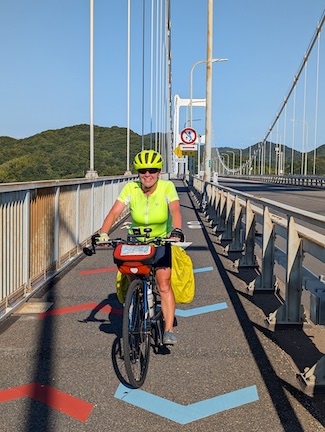
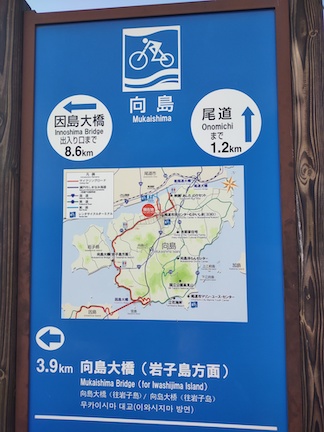
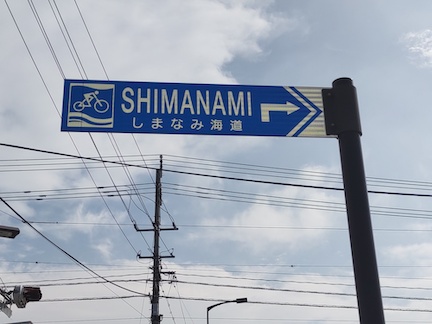
The ride and bridges were everything I could have hoped for. The route was well marked, with a blue line and directions to the next bridge, it was so easy to follow. Most people do this ride as a one-day challenge ride. The distance is 75 kms from the ferry dock at Mukaishima on the first Island to the train/bus station at Imabari.

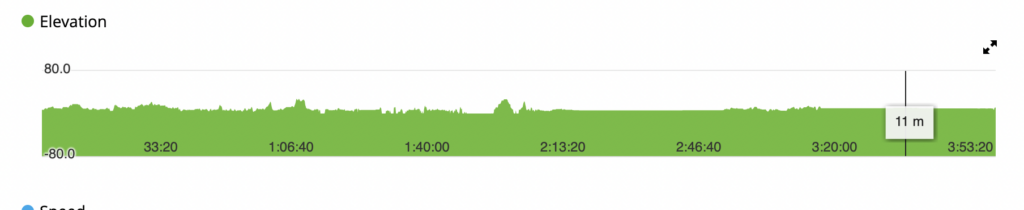
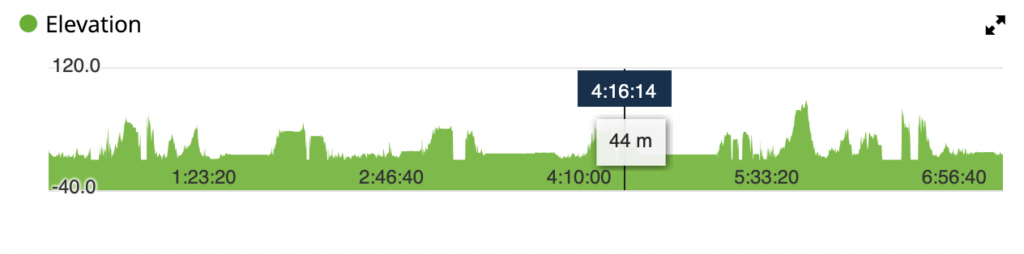
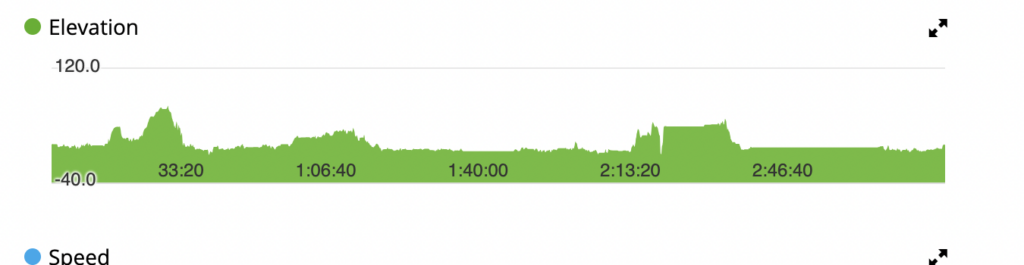
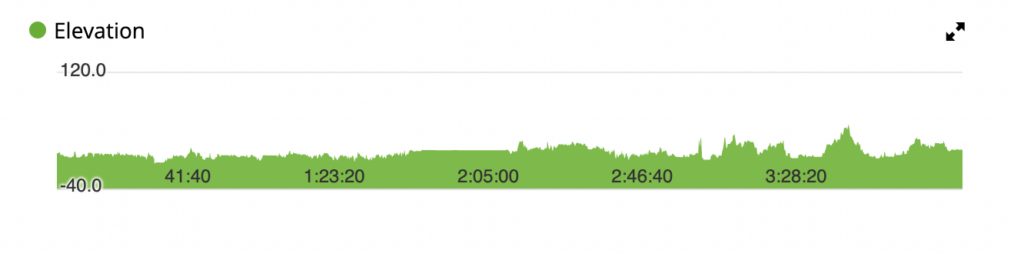
On my garmin and garmin connect the elevation was 1141 metres of climbing. All the climbs are an average of 3% over a varying distance of 1.7 kms to 700 metres.

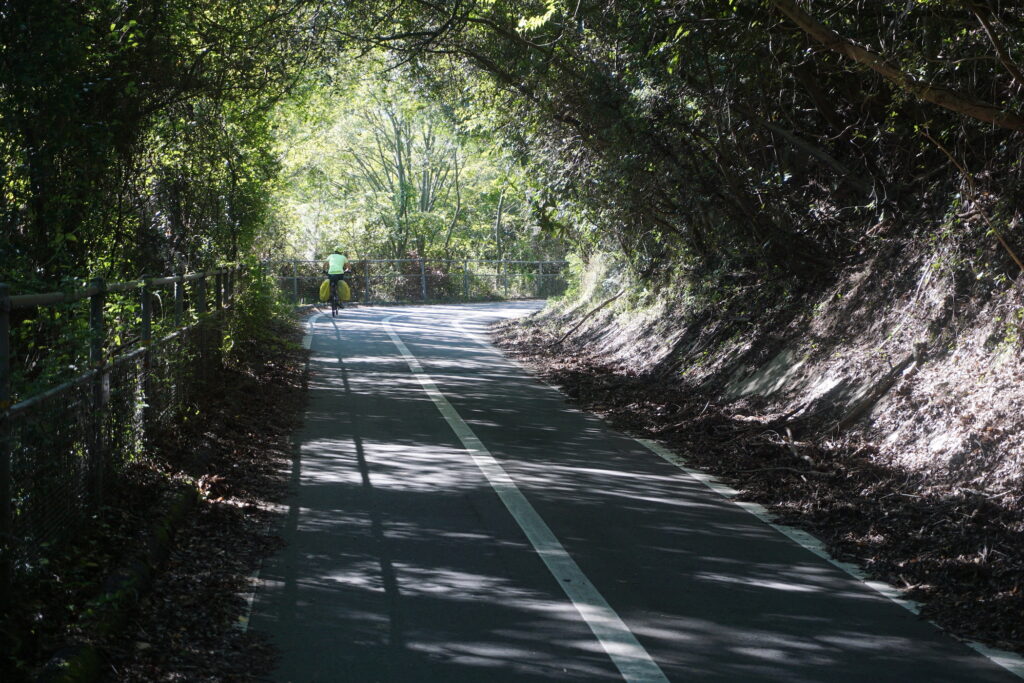
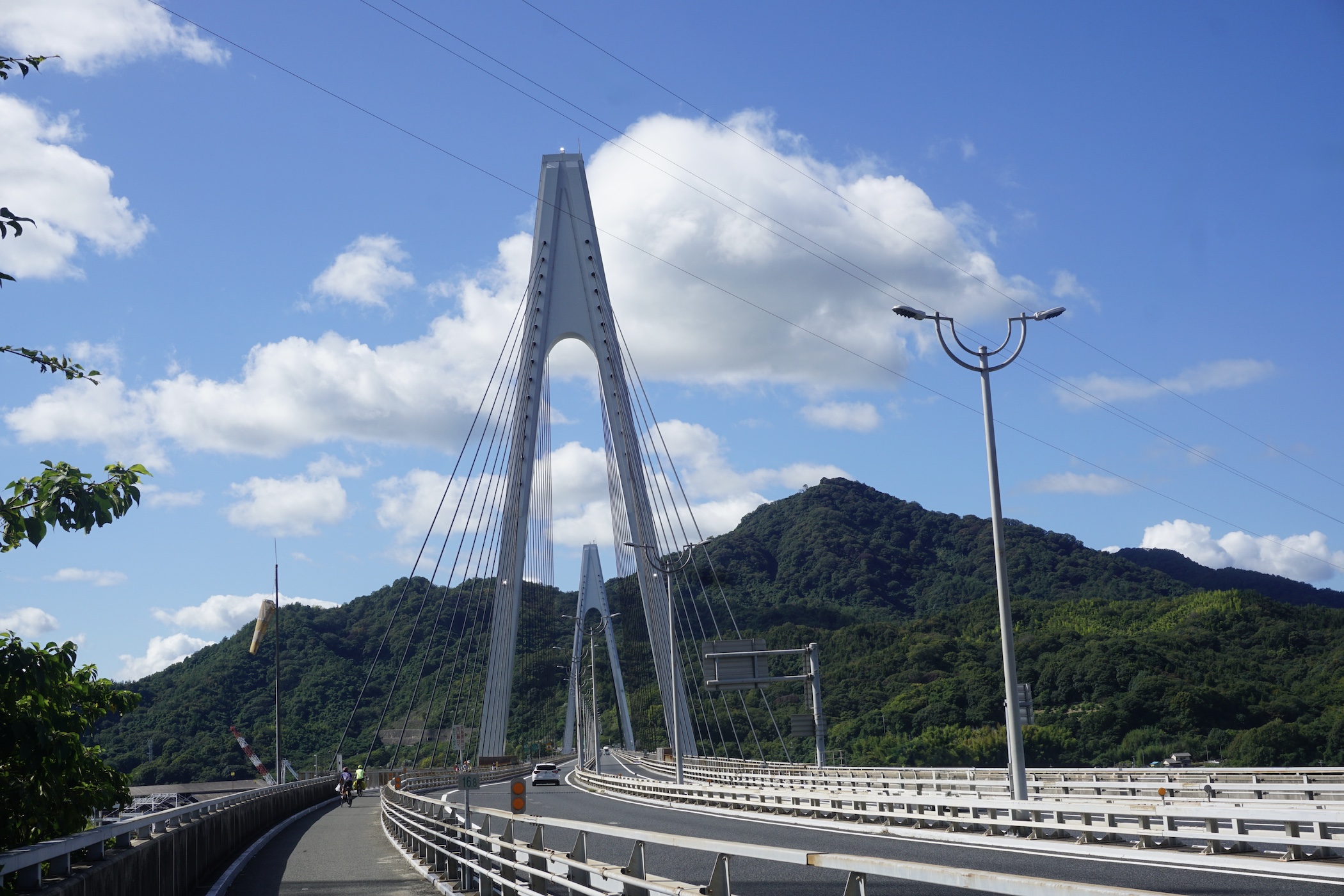
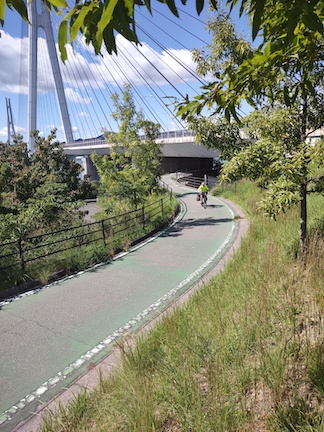
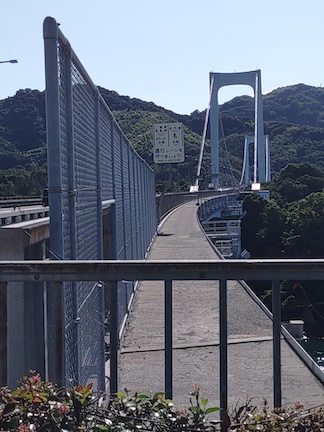
This was one of the approaches to the bridges.

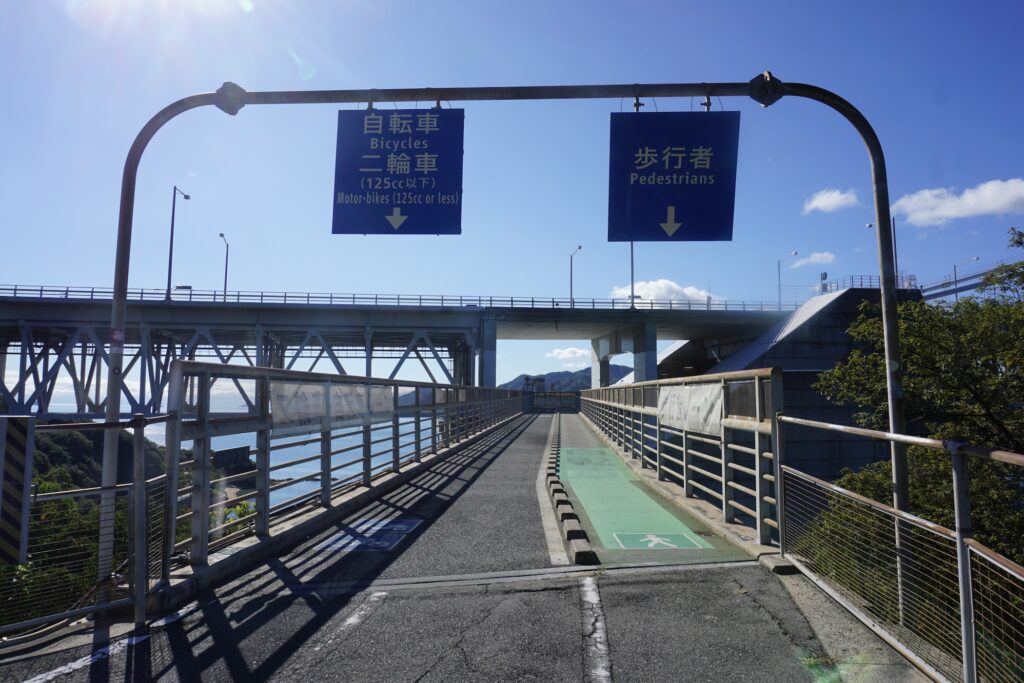
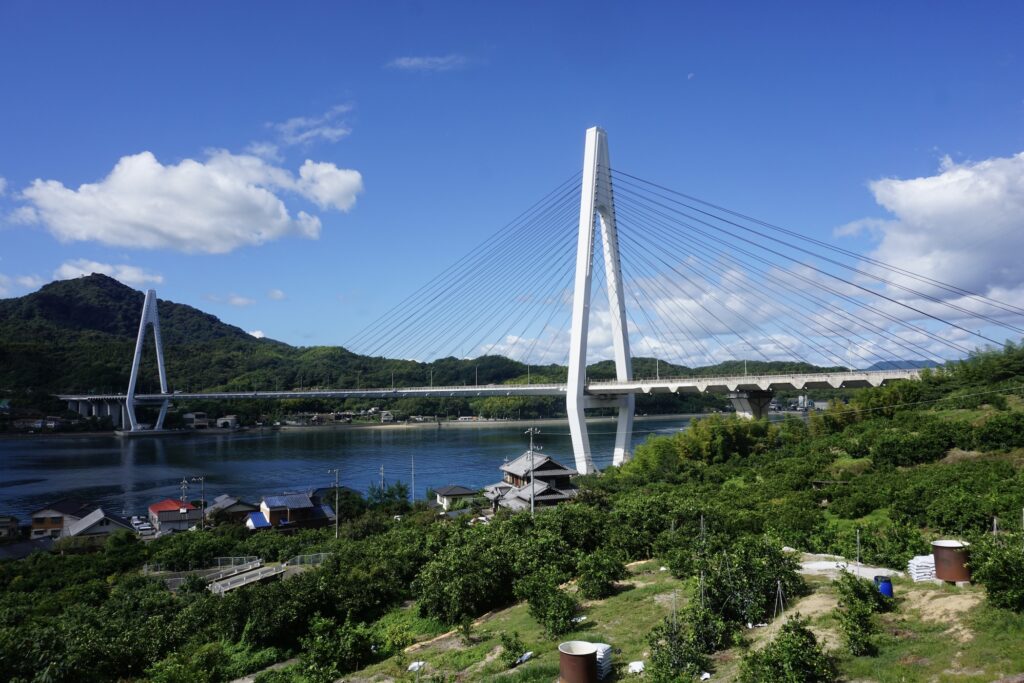
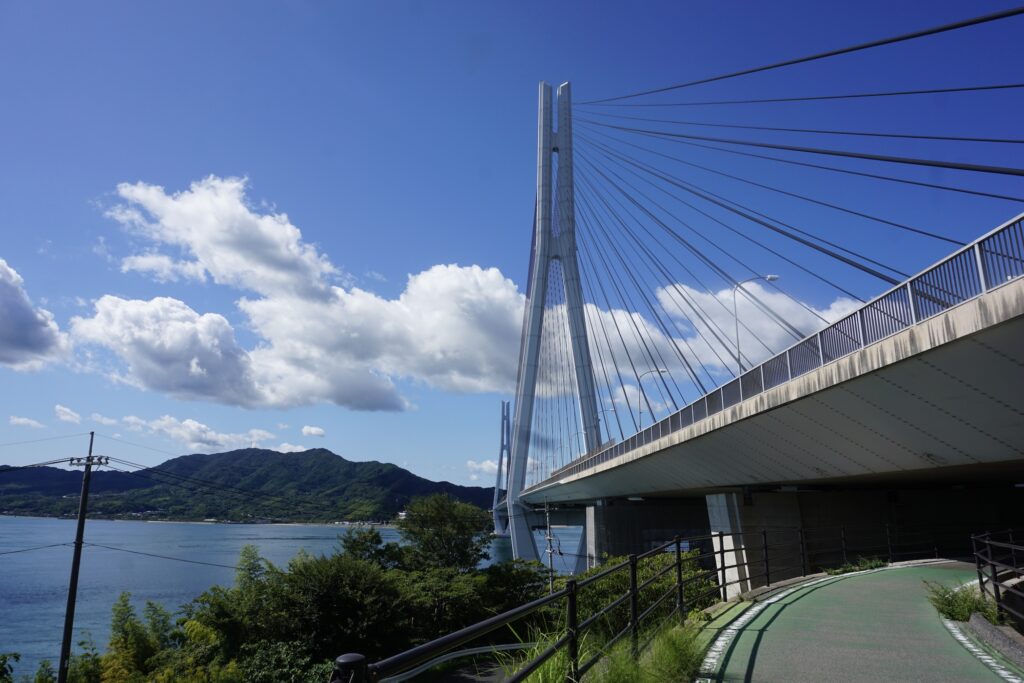
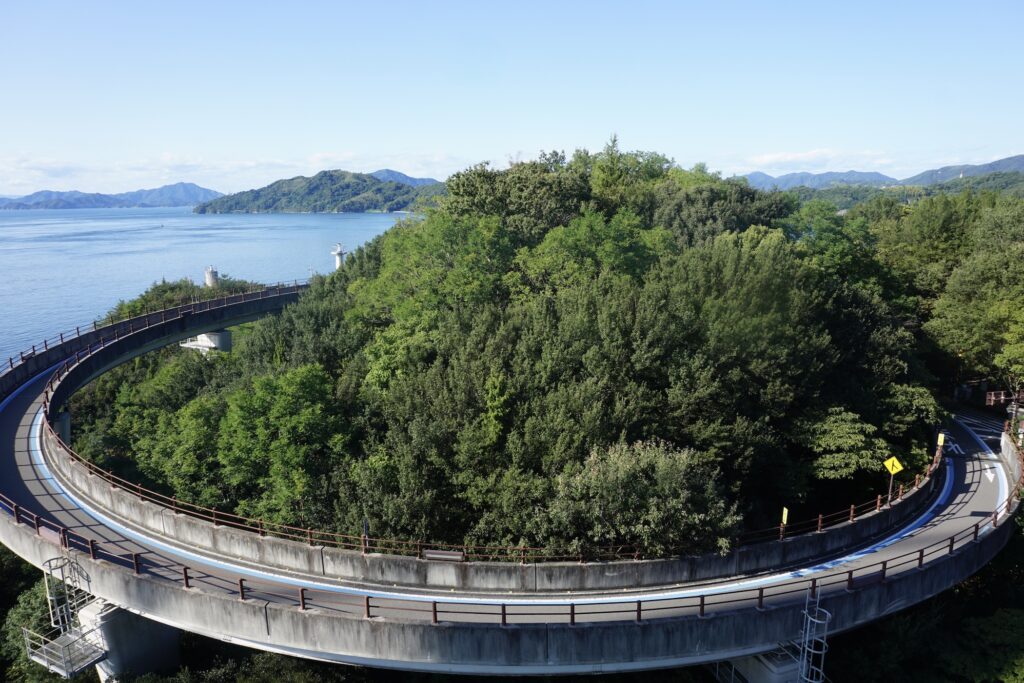
We would approach the bridge and often there was a spot where you could take a photo of the bridge. Then there would be a bicycle and scooter path to take you up to the cycle path that took you across the bridge.

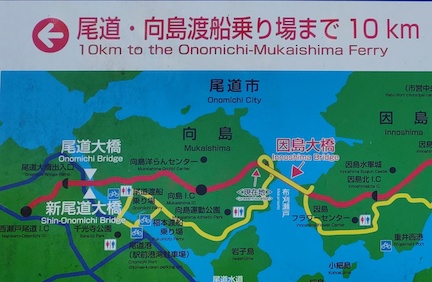
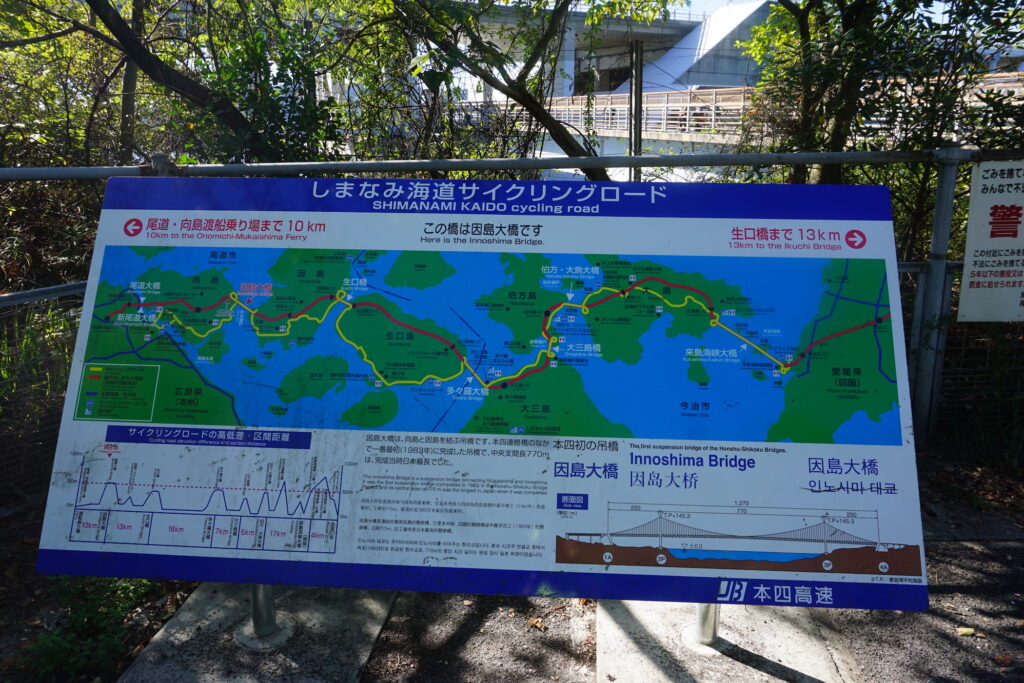
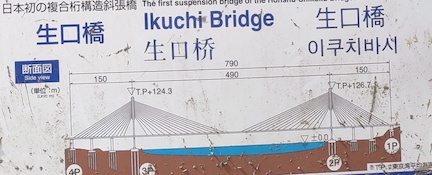
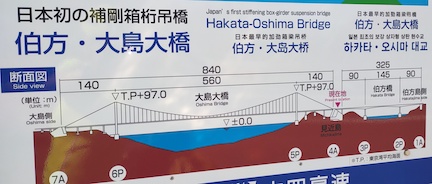
The thought and engineering behind the bridge construction and the approaches for scooters and cyclists was inspiring. Prior to crossing there was an information board about the bridge, size, construction date, and distance to the next bridge. Both Ralf and I had big grins on our faces all day.

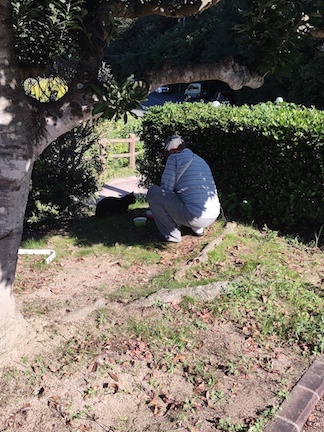
As we came to the first area where we could get a good photo of the first bridge there was an old fella feeding a stray cat. The little black cat waited patiently as he got the bowl out and then the food. The old man chatted quietly to the cat all the time he was preparing the kitty’s food. I have read a couple of books by the author Hiro Arikawa – The Cat Chronicles is awesome. If you want an easy read and a fun insight into cats, this is a good book.

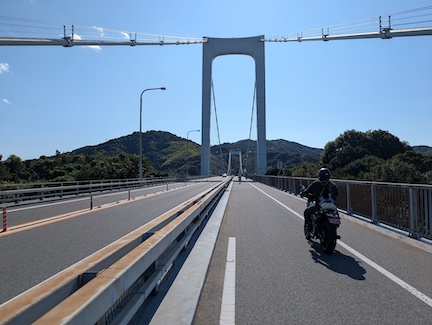
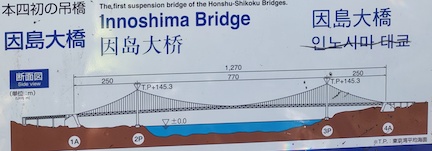
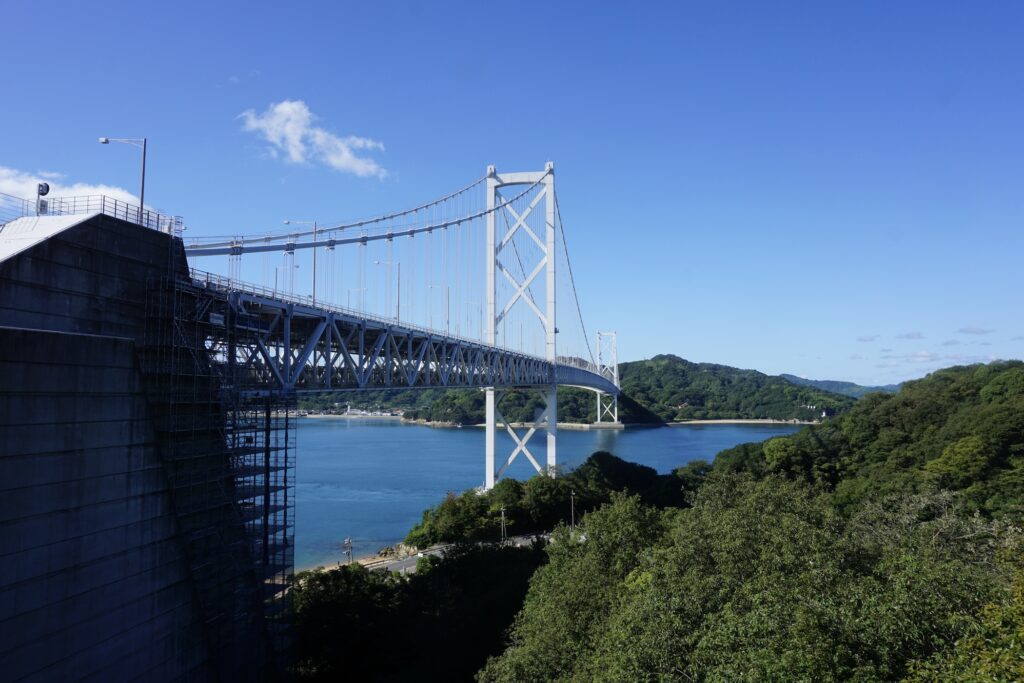
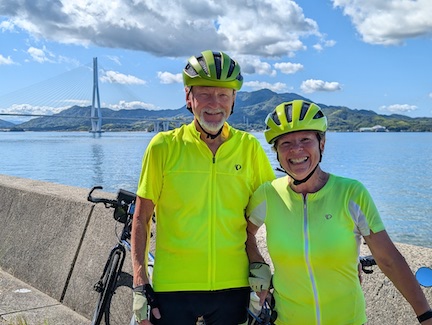
The first bridge of the day was the Innoshima bridge, a suspension bridge connecting Mukaishima and Innoshima. It was the first bridge (completed in 1983) in the Honshu-Shikoku Bridge Project. It’s central span of 770 m was the longest in Japan when it was completed.

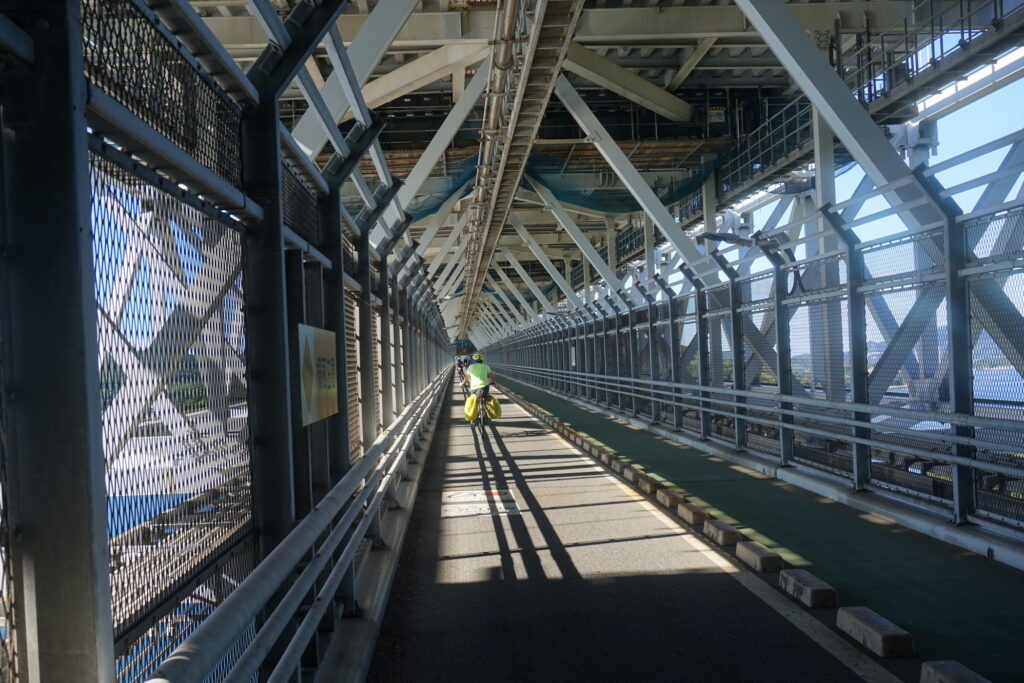
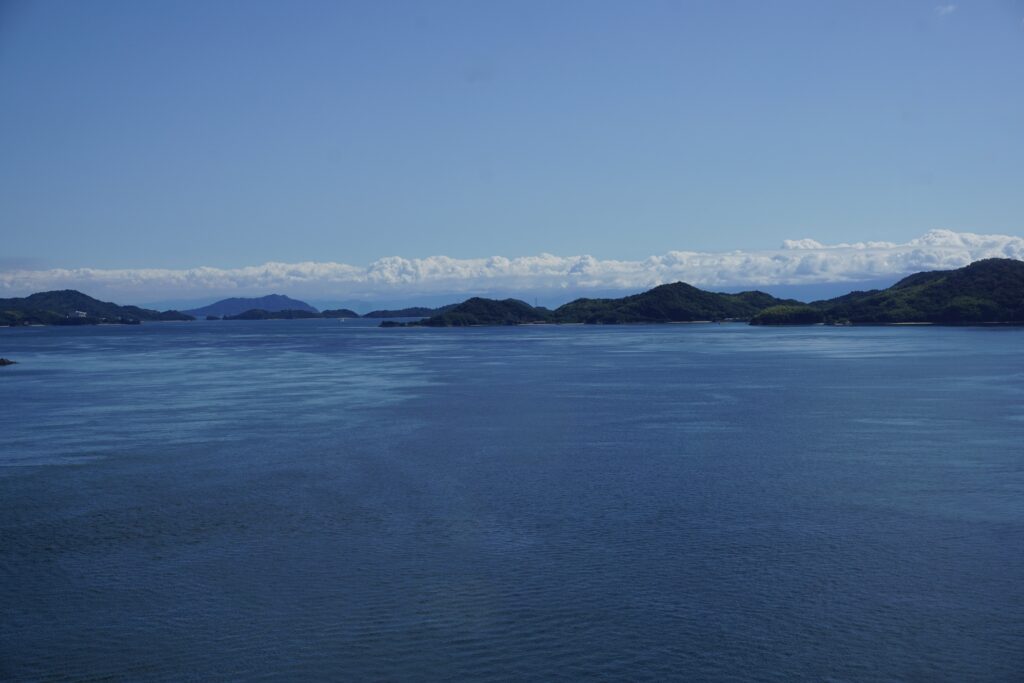
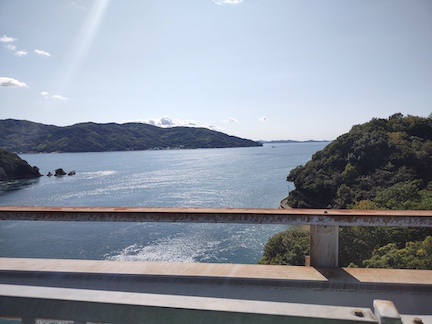
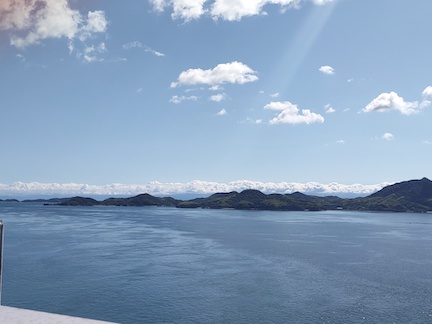
We cycled on our own path, underneath the car deck. The view from the bridge was amazing. There appears to be a lot of small beaches in the area.

The second bridge was the Ikuchi Bridge, it Is a cable-stayed bridge connecting Innoshima to Ikuchima. It is the first cable-stayed bridge in Japan to use a composite girder structure with heavy concrete girders in the side spans and steel girders in the center span.
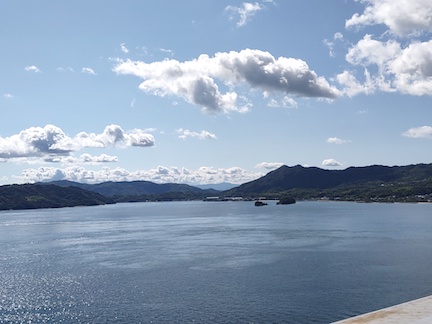
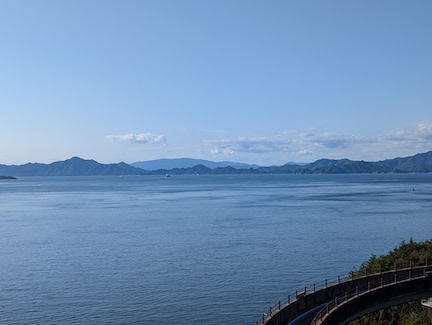
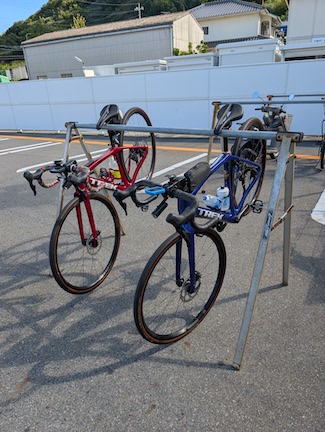
Between the second and third bridges, we cycled along the blue line overlooking the Seto Inland Sea. At the first Family Mart we met a Japanese couple who were training for 100 km hilly ride. They were going to cycle to the second Island then turn around and go back to Onomichi. They both had really nice Trek bicycles with electronic shifters. He spoke good English, and she didn’t speak a word of English. He complained slightly that she had the better bike.

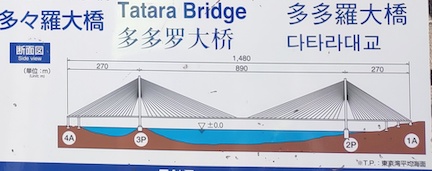
The third bridge was the Tatara Bridge. The Tatara Bridge is a cable-stayed bridge connecting Ikuchima and Omishima. It was the world’s largest cable-stayed bridge when it was completed, with a central span of 890 metres. The original plan was for a suspension bridge, but it was changed to a cable-stayed bridge in consideration of the preservation of natural environment and economic efficiency.

We had 16 kms to cycle to the next bridge. There would have been lots of things to see on this Island Omishima, if we had chosen to make this a longer route.

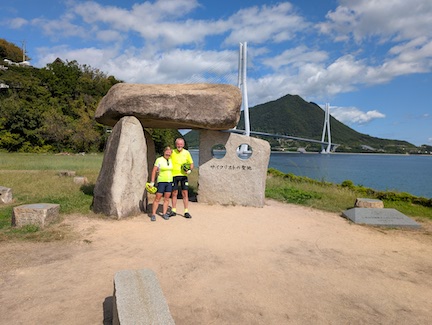
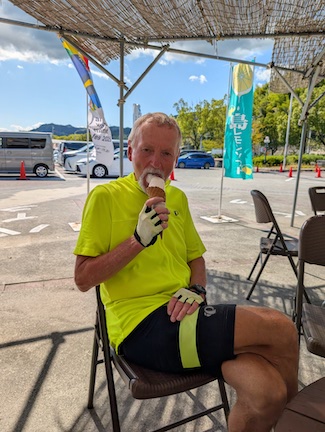
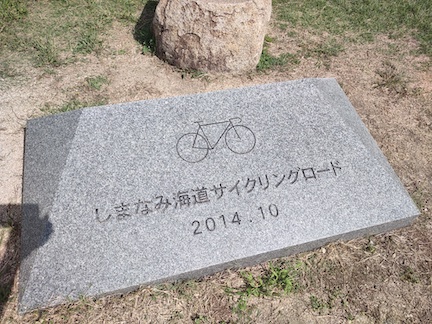
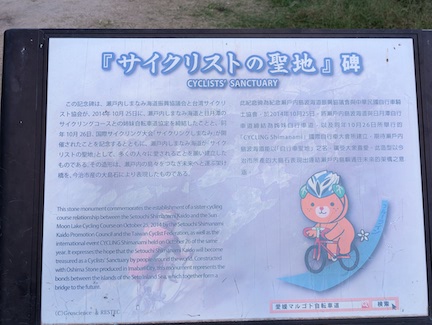
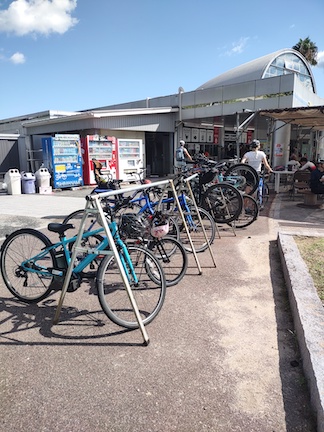
At the end of the bridge is a cyclist’s sanctuary. A place to stop have something to eat, relax, take in the view. The “Stonehenge” photo is mandatory, and the area was created as a twinning between Taiwan (Round the Island) and Japan (Shimanami Kaido). We had a soft-serve ice-cream and carried on. Neither of us fancied a burger and fries! There were a lot of cyclists stopping here. As this was a Monday I was surprised to see how many cyclists and families were out and about.

We carried on to the next Family Mart replenished our water and had lunch. We met a Scottish fella with his Polish girlfriend. She told me that she cycled, but only about 15 – 20 kms. She was wearing a pair of shorts that I thought would be better for playing beach volleyball, not for riding 75 kms. Her lady parts were going to be sore.  On the last bridge with about 15 kms to go she was really struggling, tired, sore and wasn’t sure if she would get to Imabari. Once you are on the last bridge, there is only one way to go. We did see quite a few people who had bitten off more than they could chew, they were looking very tired. Ralf and I thoroughly enjoyed the ride.

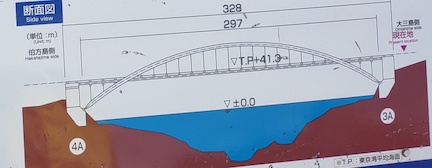
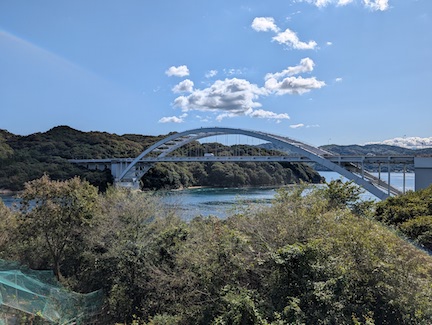
The fourth Bridge the Omishima Bridge is a span bridge connecting Omishima to Hakatajima. The bridge was the first to be completed among the Honshu – Shikoku bridges (1979). The 297-metre arch bridge was the longest in Japan at the time.

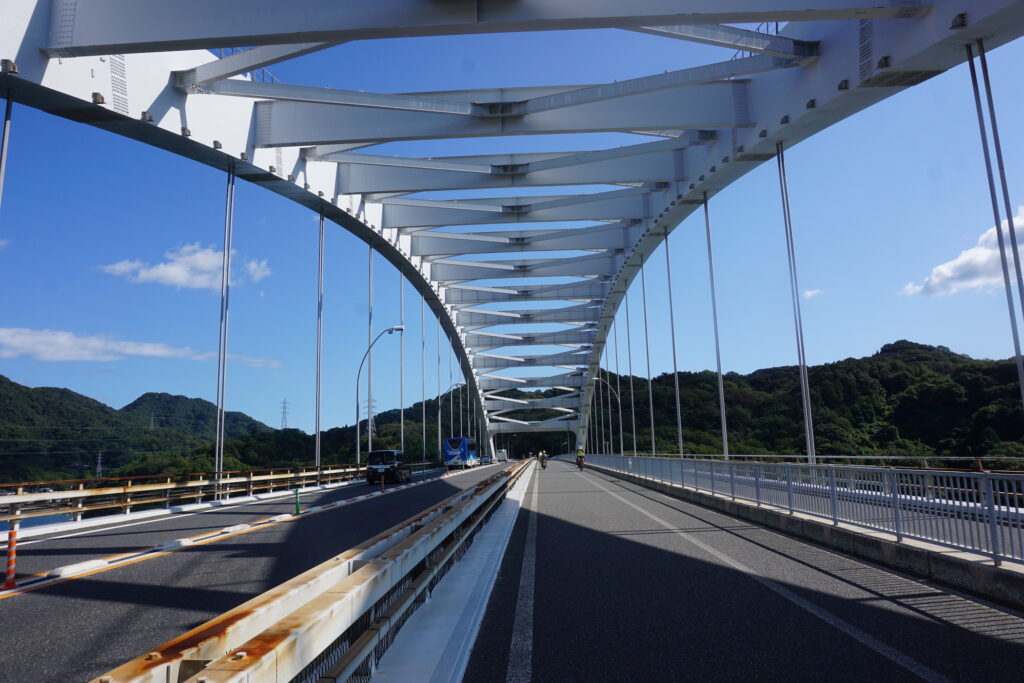
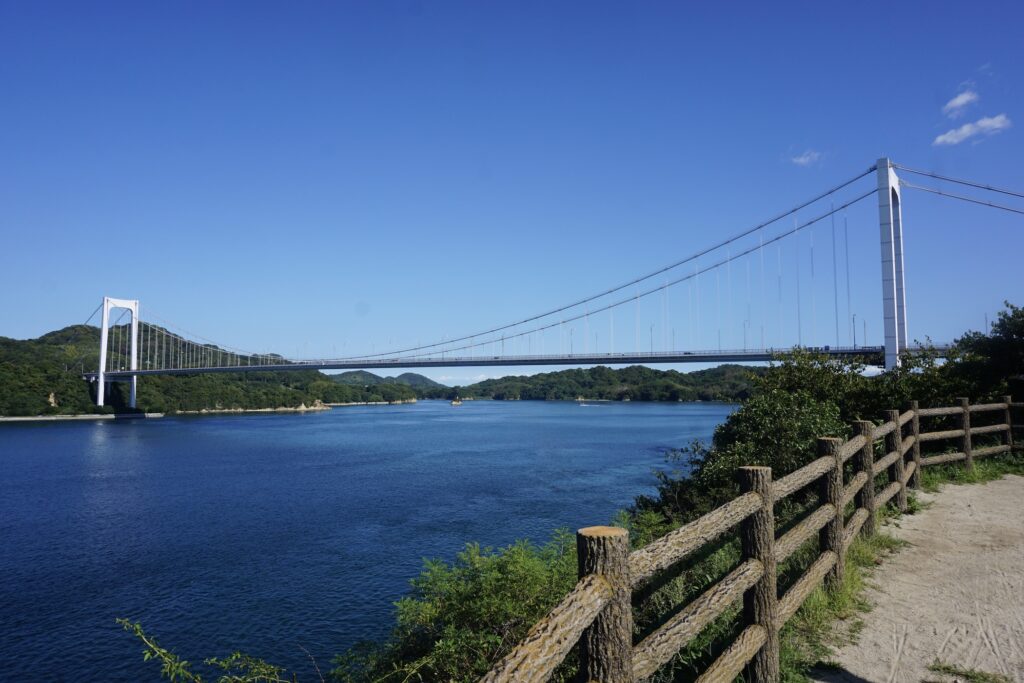
The fifth bridge Hakata-Oshima Bridge. The Hakata bridge is a steel girder bridge connecting Hakatajima and Michikajima. The Oshima Bridge is a suspension bridge connecting Michikajima and Oshima, with stiffening box girders adopted for the first time in Japan.
This photo looks as though there is no barrier. We cycled on the other side. There was a barrier between the cycle/scooter path and the cars on all of the bridges.

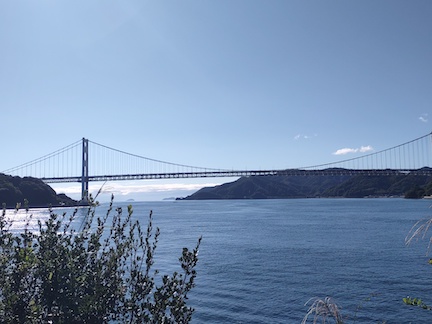
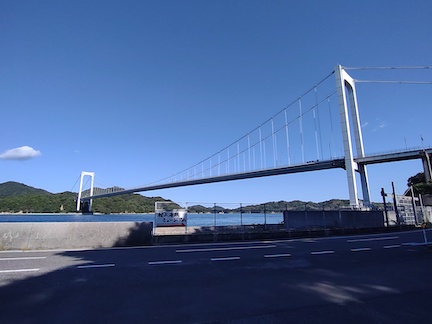
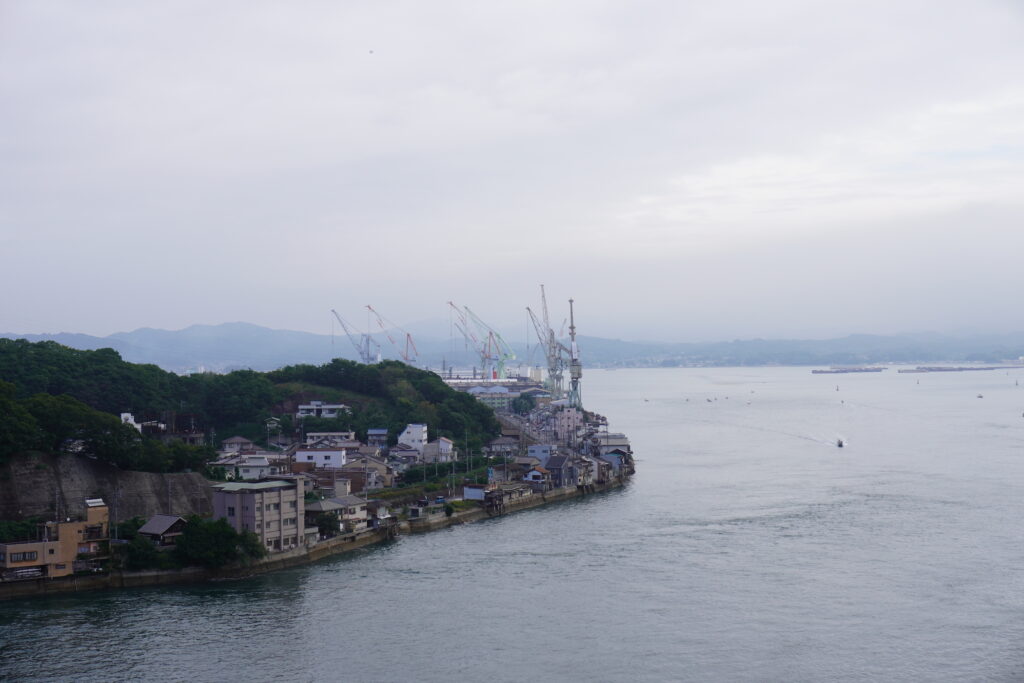
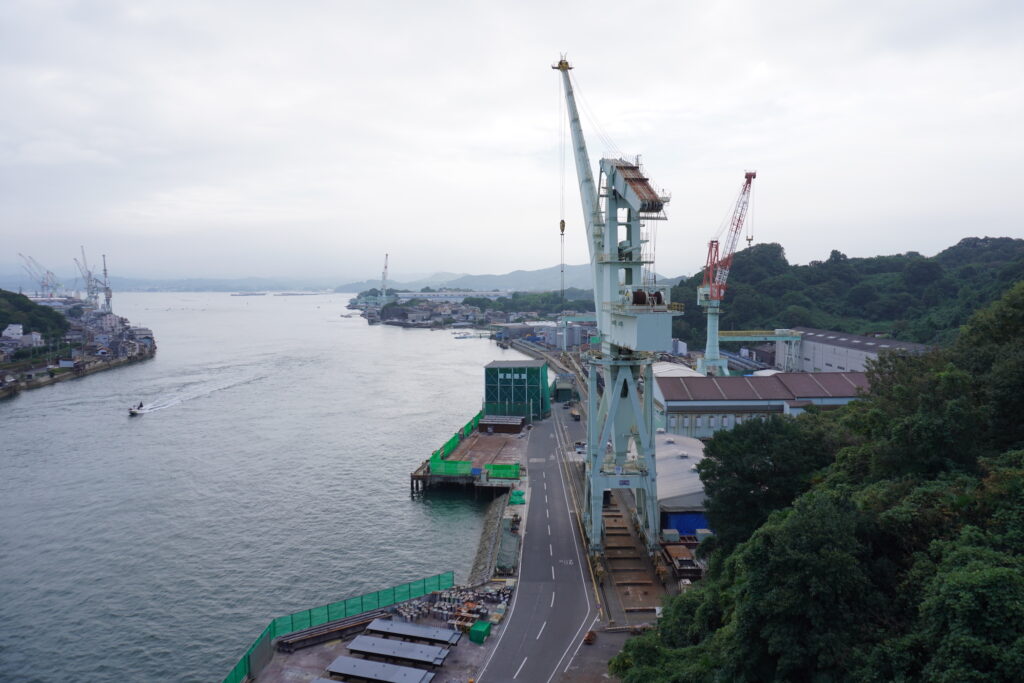
The sixth Bridge the Kurushima-Kaikyo Bride is approximately 4 kms long it is the world’s first three continuous suspension bridge located between Oshima and Imabari. The Kurushima Strait, is one of Japan’s three major tidal currents and well-known to seafarers for its dangers. The triple suspension bridge is of an economical design as its structure shares one foundation between two bridges. The bridge opened in 1999. I missed the information sign on this bridge.

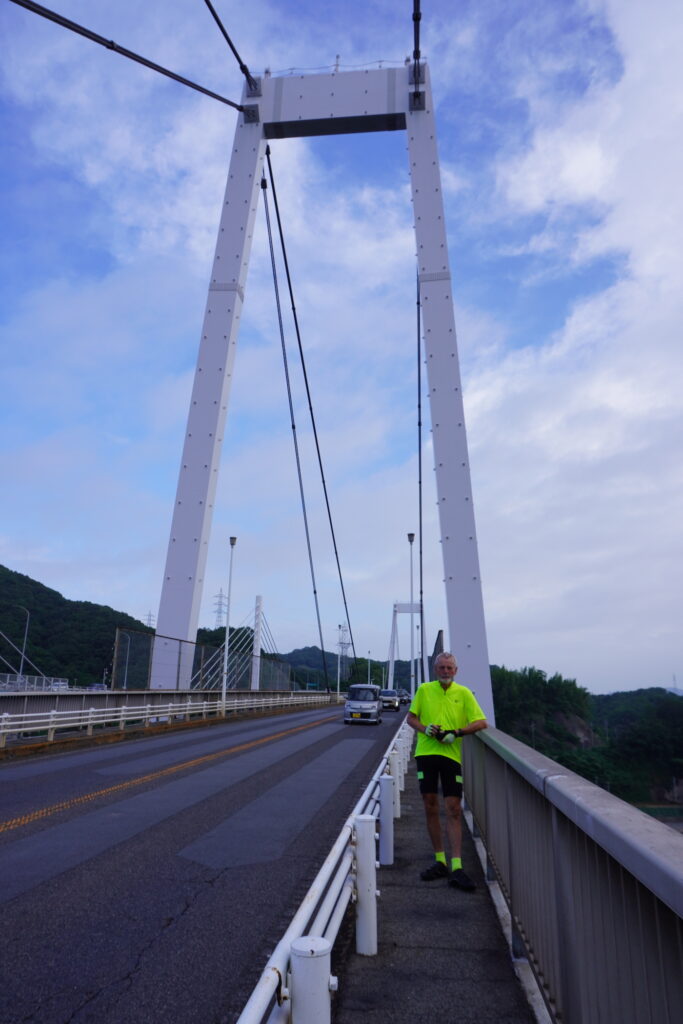
The last bridge and still smiling

Video of Ralf catching up to me on the last bridge

This is the cycle path from the last bridge, awesome design.
What I hadn’t read on any other post was that there was so much to see and do along the route. We met a Japanese lady from Tokyo that comes to this area two or three times a year. She cycles the bridges but stays for a few days on one of the islands and visits interesting places to see on that island.
She took a couple of nice photos of Ralf and me.

I had read on one post that there were no hotels on the Islands, you had to do the Shimanami Kaido in one day. I noticed lots of bike hostels, and small guesthouses I am not sure how you would find out how to book these, but it would be nice to be able to spend some time in this area. 

What would be nice is to cycle the bridges in one day, spend a bit of time in Imabari and Shikoku Island then cycle back across the seven bridges and take breaks along the way staying at the different Islands. Hindsight!

When we arrived at Imabari train station Ralf followed the directions on google maps to the guesthouse we were staying at for the night.

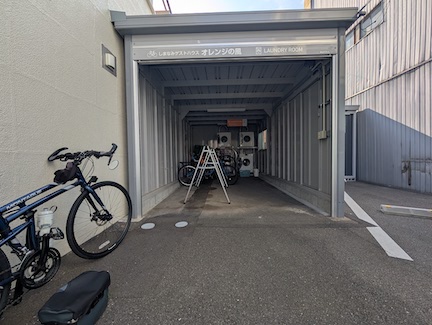
The old fella that manned reception invited us in, directed us to sit down and left. Minutes later he was back and took us to the garage where we could lock our bikes. He showed me the code and after securing the bikes inside the garage we went back into the guest house. Again, he directed us to sit. We hadn’t registered he hadn’t checked our passports, we both wanted to get to the room and have a good shower. He kept directing Ralf to sit, Ralf using google translate indicated that he had been sitting on a bike all day, he needed to stand. They both laughed. Again, he left, minutes later he came back with a lady who spoke good English. She registered us took us to our room and showed us the shower rooms, Japanese bath and toilets. We are in a family room with three futons, only two were laid out for us. Everything was new, you could almost smell the wallpaper paste, it was so new.

After showering, we went back downstairs and met a fellow cyclist that had all his stuff everywhere in the small kitchen area. He was washing out his backpack and everything that had been inside. He had bought some fish on his ride and added ice to the bag. The bag leaked and now everything was a fishy mess.

We asked the lady at the front desk where to eat and she recommended a couple of places. Off we went down streets and alleyways and eventually found the first restaurant – it was closed, as was the second restaurant. We headed towards the train station, everything was closing and there did not appear to be any restaurants open. There was a bakery closing and we got some buns and sweet stuff for dessert at 50% off. Not Family Mart again, no we found a large supermarket where we would get breakfast food and dinner.

Imabari Museum

There had been a lot of people on the bridges, and we later discovered that today was a National Holiday to encourage sport and recreation.

Back to the guesthouse and buddy was still cleaning his backpack. Raf and I sat at the table and ate while the other guy was telling us about his trip and his bike. He was an older fella (77), originally from the U.S. he had moved to Canada to avoid the draft of the Vietnam war. He had been in Tokyo for a week and then came to Shikoku Island. He had cycled the bridges and was thinking about cycling Shikoku, but wasn’t sure he would have time or be able to get the bike on the train. He indicated that his wife didn’t ride and that it must be nice to be able to ride with your partner.

I would say that this is the best day of riding in Japan. Lake Biwa was good, but this was awesome.
We went up to our room and fell asleep quickly. I didn’t write this blog until much later. (October 19, 2025). Tomorrows blog will explain all.

Sendacho, Fukuyama to Mukaishima 36.74

Sunday October 12, 2025

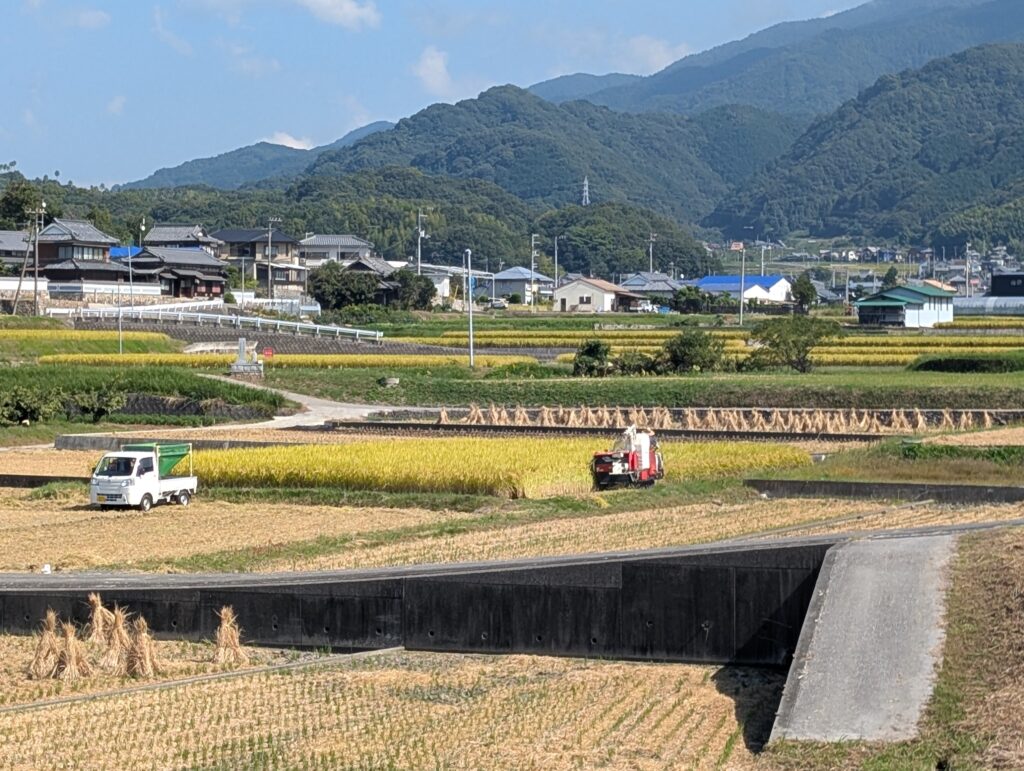
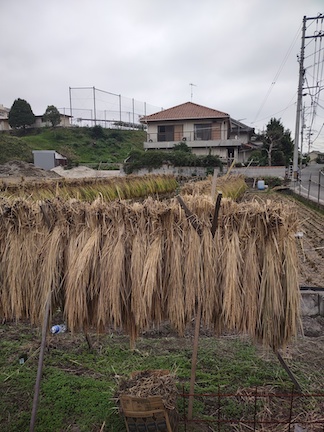
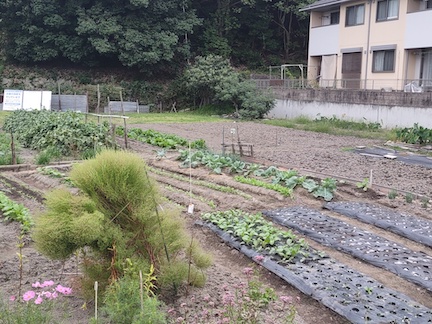
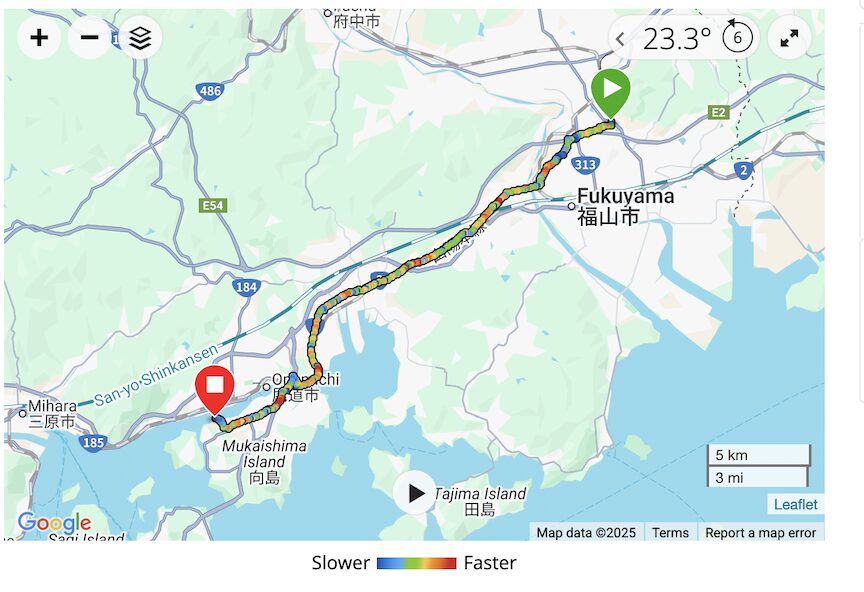
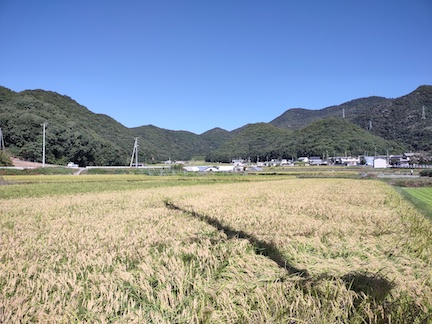
RidewithGPS gave us a nice route to Mukaishima. After we left the hotel and Highway 2 we followed some smaller roads through quiet villages. It is definitely harvest time for the rice, and families were working together to get the rice cut and dried.

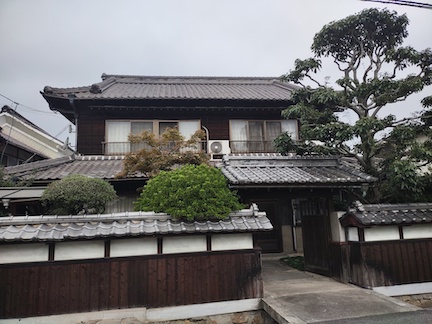
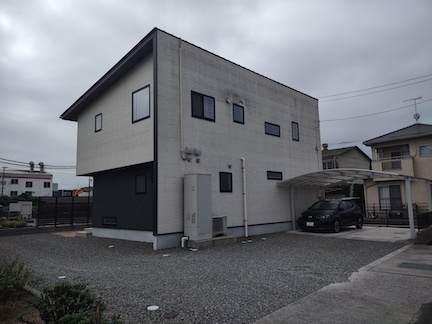
There appears to be a lot of new builds and subdivisions. This means that some of the smaller rice fields are being removed from production and new houses are being built.  I stopped to take a photo of this old traditional house, opposite a newer house construction.

We are now on the Shimanami Kaido. This is a “must do” bike route in Japan. The Shimanami Kaido is a 70 km stretch of road for cyclists that connects Onomichi to Imabari and crosses six bridges, connecting six islands in Ehime Prefecture. Most cyclists complete the ride in one day.
We were not sure how long it would take us to get to Mukaishima and decided to spend a night here before completing the rest of the Shimanami Kaido. We were three hours early for check-in at the Lighthouse Hotel. Ralf asked if we could leave our bags so that we could cycle into town (about 3kms).  No problem.

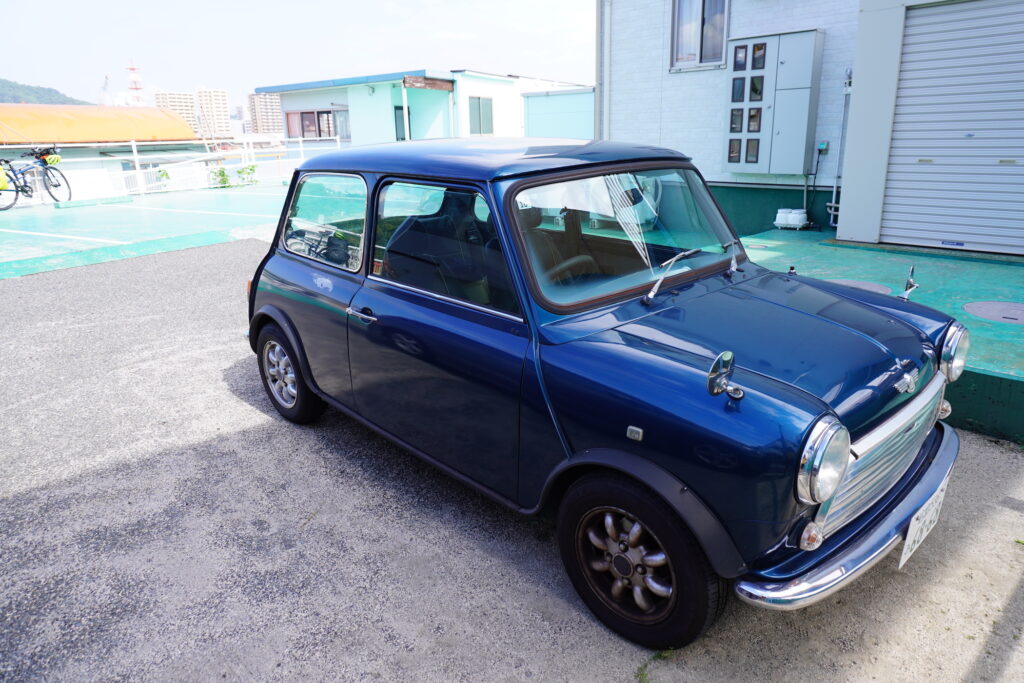
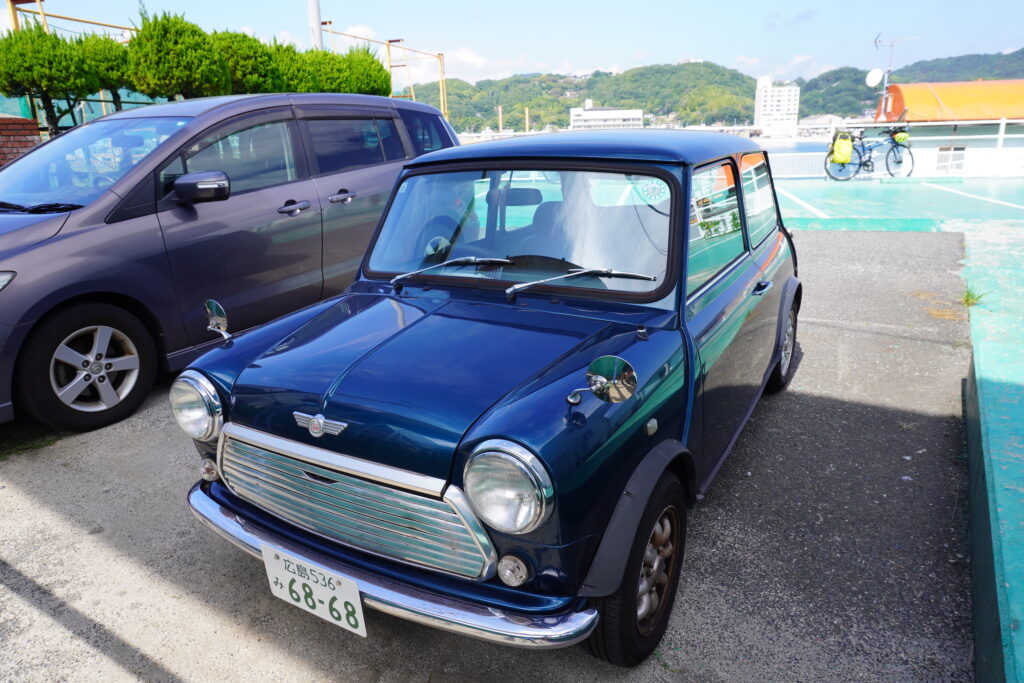
This old mini-cooper was in the parking lot.

After crossing the first bridge on the Shiminami Kaido, we walked back onto the bridge so that we could take photos.

This was on the vending machine in the rest area.

We had a second lunch and a good cup of coffee at the Foccia Puffer. Then we found a bike shop, which had rental bikes and also sold bikes (Panasonic Bikes), for local residents.  The lady we spoke to spoke very good English. She had recently been in Canada, taking her family to show them where she used to live in Toronto.

We noticed a lot of cyclists congregating in this area. There was a ferry crossing to Imabari. I think a lot of cyclists skip the first bridge, and take the ferry to Mukaishima.

We came back to the hotel and checked in at 2:30. We had bought some noodles from the Family Mart for dinner as we are about 3.5km from the downtown. We paid extra for breakfast, which should give us a good start for a long day of cycling with “hills”. The hills are the ramps up to the bridges.

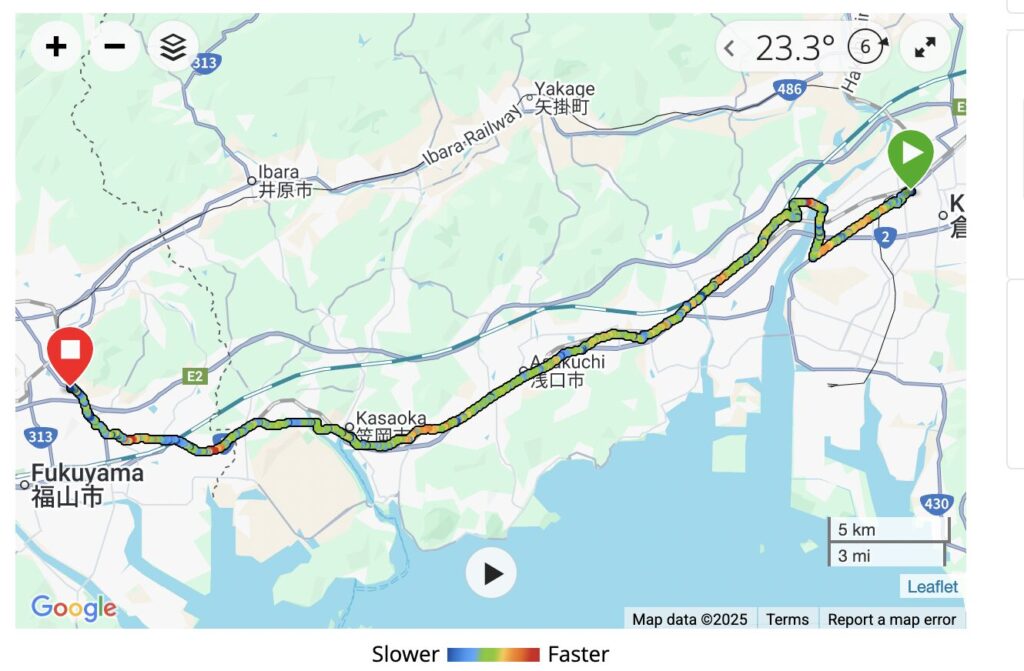
Kurashiki to Sendacho, Fukuyama 45.93 kms

Saturday October 11, 2025

We decided today to use Google maps and not RidewithGPS. I couldn’t find the end hotel on RidewithGPS and I knew we were going to be north of Fukuyama. The route today was a mix of rural and highway riding. Of course the highway has a shoulder that can be good or diabolical. The diabolical is when the cycle/pedestrian path reduces to shoulder width and your bike with panniers is the size of a small car. If we cycle on the busy road, most of the cars give us about a foot of space, some slow down, as they pass but it can be scary.

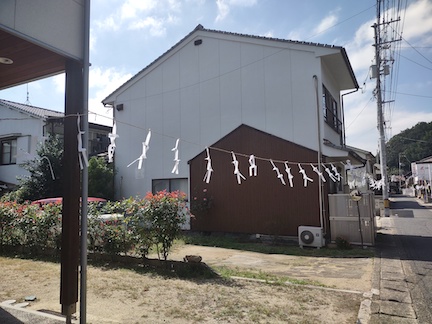
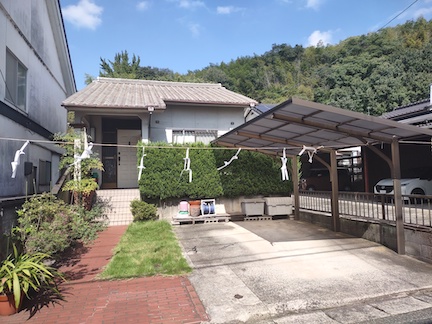
Today was not a particularly pretty route, there were some nice areas. We went through a village that had lots of paper cut-outs on strings. We were trying to decide what they were representing – respect for a death in the village, celebration of some sort or drying out toilet paper?

Googles answer is:

In Japanese villages, the meaning of hanging paper cutouts is most often rooted in Shinto traditions. 

  • Shide: These are zigzag-shaped paper streamers that are frequently hung from ropes (shimenawa), branches, or ritual wands (gohei) to indicate a sacred, ritually pure space. They are believed to mark the boundary between the sacred and the profane.
  • Purification: Shinto priests wave a wand with shide attached to purify a person, item, or piece of property and ward off evil spirits.
  • Harvest and fertility: The zigzag shape of the shide can represent lightning, symbolizing fertility and the potential for a good harvest.
  • Teru teru bozu: These are white paper or cloth dolls hung by a string, typically in windows. They are used to wish for good weather and prevent rain

Currently they are harvesting the rice, and it is forecast for rain – I think these cut-outs were Teru-teru bozu.

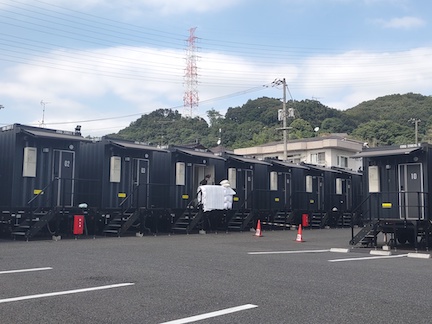
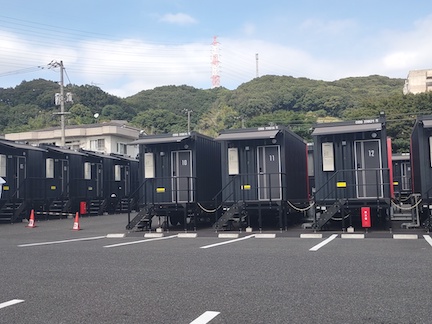
We passed R9Yard Hotels. These are “hotel” rooms in shipping containers. Usually they are not too expensive, but for a Saturday night they were well out of our price range.

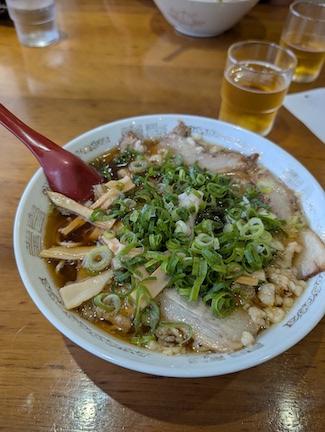
Tonight, we are in our second love motel. It has an Australian theme, a drawing of the Sydney harbor bridge and the opera house on the screen doors. It is very clean and spacious. After we settled in we wandered down to a restaurant. We had a lovely meal with pork and ramen and a beer.

Of course, when we walked in we could  almost hear a collective intake of breath, and rock, paper, scissors as to who is going to serve the foreigners. We quickly translated the menu and ordered two pork ramen and one large beer. The waiter who lost the rock, paper, scissors breathed a sigh of relief and took the order back to the kitchen. He came back with a large bottle of beer and one glass, he quickly got a second glass. As we left Ralf had already translated “That was really good, Thank you” and showed it to the lass at the cash, she had a big smile on her face. Yeah we served foreigners and it was good.

Back to the hotel room with a bottle of Korean Happy Water. We have no idea what is in this alcoholic drink, but it is good. We drank it when we were in Korea and really liked it, pleased to find it in Japan at $3.50 a bottle. In Canada it is $10.00 a bottle.

Hinase to Kurashiki – 56.01

Friday October 10, 2025

A good day.

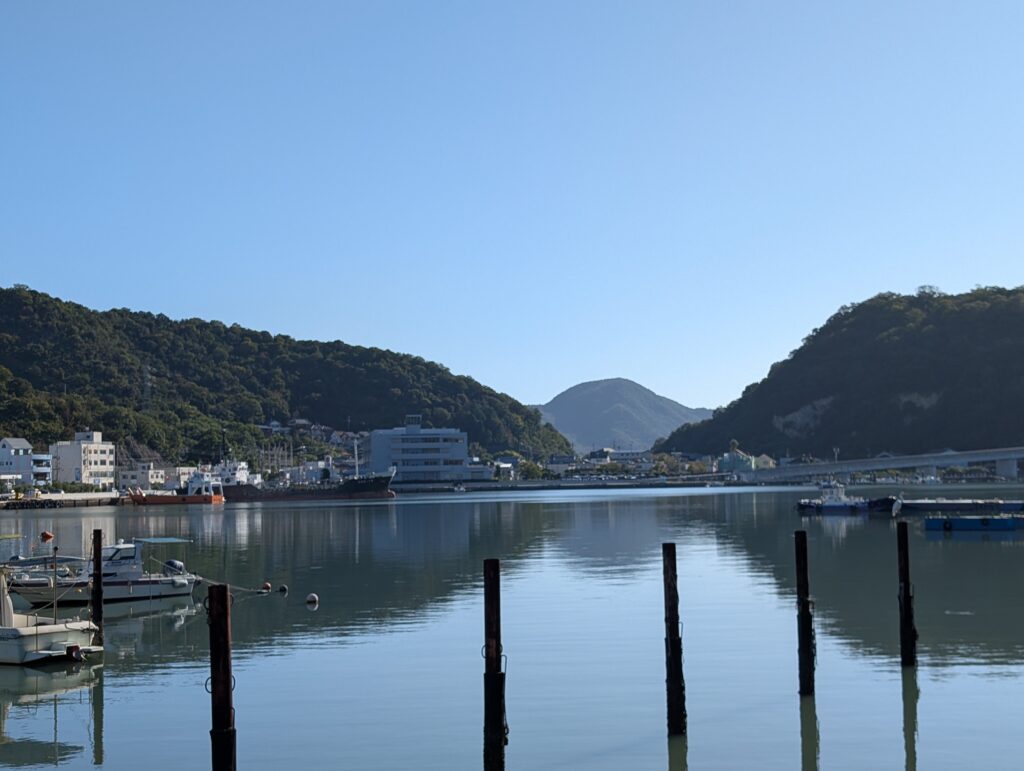
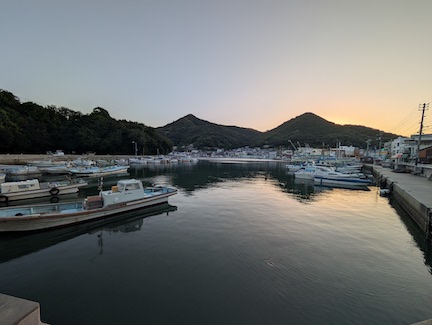
View of harbour as we left Hinase

We left Hinase along the same road that we came to the hotel. We were hoping to get some air in the tires at a local bike shop. We were a little early and we were about to leave when the owner came out. She said that she was taking a rest day. Ralf indicated that we were hoping to get some air. She took us to the garage behind the shop and tried to put air from a compressor into my tire. I had less air in my tire than when we started. Ralf had to get the new pump out and use that to put some air back into the tire. We did find a bike shop later in the ride and the fella quite happily added air to our tires. He wished us well on our trip. Ralf asked if they use psi, bar or kPa. His answer was no. I think they just go by feel!

RidewithGPS took us away from Highway 2 and up a steep hill. I had to push the last 50 metres. When we crested and went down the other side we saw all the trucks coming out of a tunnel. RidewithGPS had routed us around the tunnel that had no shoulder and lots of trucks. Thank you RidewithGPS.

The first 30 kms were very nice we went through a village that was well known for its ceramics. I am sure during the height of the tourist season this village would have been inundated with tourists. It was very quiet today.

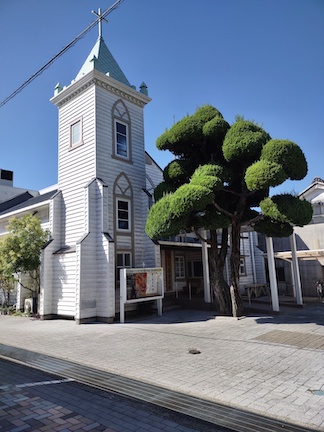
As we left this village we spotted a cross, one of the first Christian churches we have seen. Christianity was banned in Japan in 1614 by the Tokugawa Shogunate, which issued a nationwide edict to eliminate the religion due to concerns it threatened the government and national stability. The ban lasted for approximately 250 years, until the Meiji Restoration in the mid-19th century and the lifting of the ban around 1873. 

We followed the Shinkansen Line for about 10kms. There was a rural road, the Shinkansen train line and then Highway 2. We stopped at one parking area so that Ralf could get a video of the train. We waited about 5 minutes, I said to Ralf you know what will happen, as soon as you put your phone away ……here’s one, Ralf just managed to get a video of it as it zoomed past.

Cycling past rice fields and grape vines

Grapes – wine country?

The route took us through the middle of Okayama. Although it is a big city it was easy to navigate through. Unfortunately, after Okayama we were on a busy road all the way to Kurashiki. I think we have spent more time cycling on sidewalks than the actual road.

Okayama Art

Ralf suggested that this should be titled Ralf and Jacky – Ralf – Now what, Jacky – Here he goes again.

At one point as we were crossing a bridge, a young fella shouted out his car window and asked where we were going. Ralf shouted back Hiroshima. He waved at us with thumbs up and shouted safe travels.

We made good time to Kurashiki, even though we stopped twice to refuel. Sometimes, you just cannot seem to eat enough. When we arrived at the hotel one hour early, the fella behind the reception desk told Ralf we would have to bag our bikes. We have resigned ourselves to doing that and we packed our bikes in the bags and then waited in the lobby for three o’clock. Ralf asked if we could leave the bikes in the luggage storage. No, that was not allowed. At 20 minutes to three our room was ready, and we could check-in.

The restaurant across the road was a steak house and the other was a Domino’s pizza. Family Mart Convenience food again.

We could not find any accommodation in Onomichi for Saturday night (that was in our price range). The hotel prices always double, if not more, for a Saturday night stay.

Tomorrow we are staying at another Love Motel outside of Fukuyama. Sunday we will cycle the first of the seven bridges of the Shimankaido. Monday we will cycle the remaining six bridges to Imabari.

Himeji to Hinase – 60.1kms

Thursday October 9, 2025

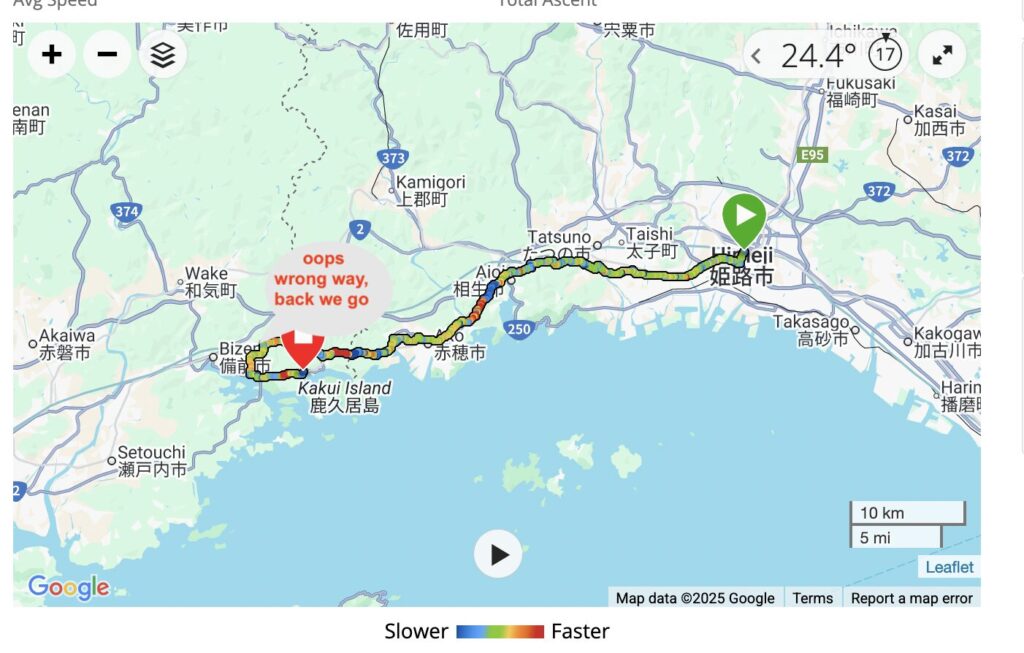
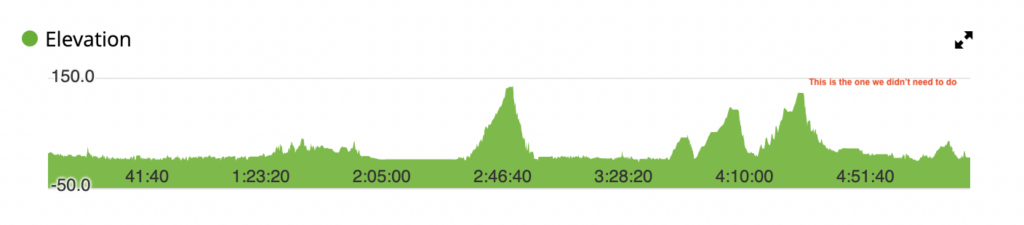
This was the best ride to date. Even though we rode an extra 5 kms and went up a 2km hill that topped out at 8. %, that we didn’t need to do.

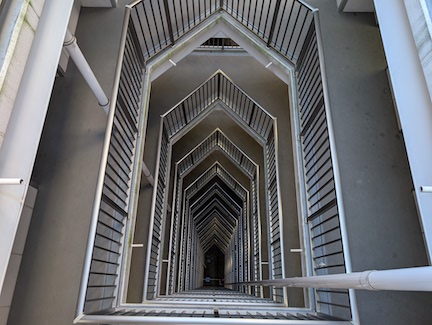
This hotel had a very interesting layout. This was the open concept staircase.

Open concept!

We had a mediocre breakfast at the hotel and headed out at just after 9:00 a.m. It seemed as if we were out of Himeji in minutes. The route was so easy to follow. I didn’t want to jinx it by saying “Wow we got out of Himeji easily”. I kept my mouth shut. At 25 kms the route had taken us away from big cities and major highways, the roads were relatively quiet, and we were enjoying the ride.

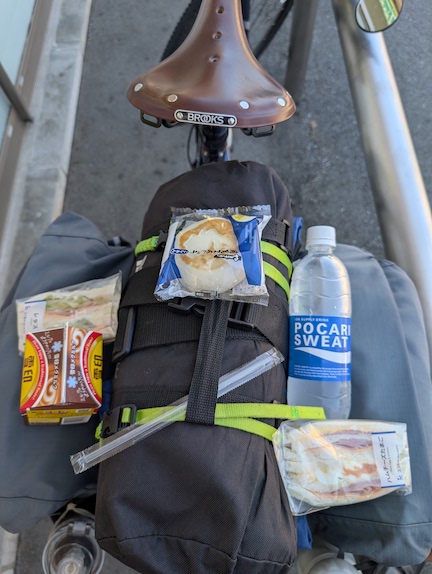
The projected distance was 55 kms. We stopped for lunch, and while Ralf was taking a photo of our lunch, I took photos of the ladies toilet!!

Average lunch

Photos of toilet signsgraffiti?

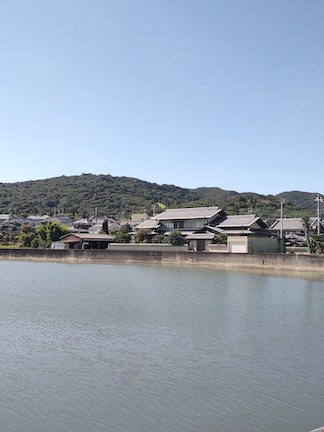
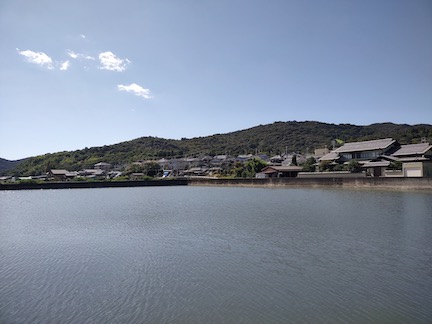
We carried along a mix of quiet roads, with lovely scenery.

I knew we had a couple of climbs, but I was feeling strong, and I didn’t need to push my bike up any of these hills. The third climb kicked up to 8% and yes I pushed it for about 500 metres. We got to an area where Highway 250 and Highway 2 merged, RidewithGPS gave us a quieter road through a couple of villages and along the Shinkansen line. It was then that we realized we may have overshot our end point. Looking at where we were on the map and where we were spending the night it indicated we were heading towards Bizen not Hinase. We had added an extra climb and 5 kms. As I looked around me all I could see was hills, we were in a valley, and it looked as though we were going to have to climb again. My heart sank a little, but Ralf took us on a quiet valley road and before I knew it we were outside of our accommodation.

We are in a Hostel type accommodation, shared bathroom, and kitchen facilities. When I look for a hotel room I generally do not want a shared bathroom, but in Japan a shared bathroom could mean an ensuite, you are sharing it with the other person in the room. In this case we were sharing it with the other person in the other room.

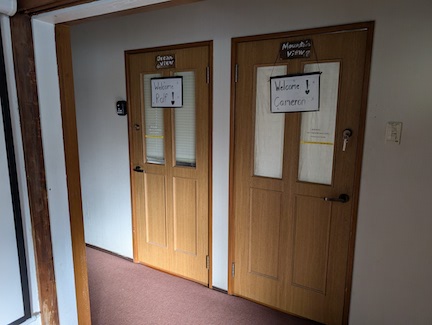
Cameron from Guelph, Ontario was also cycling Japan. We had a quick chat as he arrived, and we were leaving to get something for dinner.
A good day.

Harimi to Himeji – 28.24

Wednesday October 8, 2025

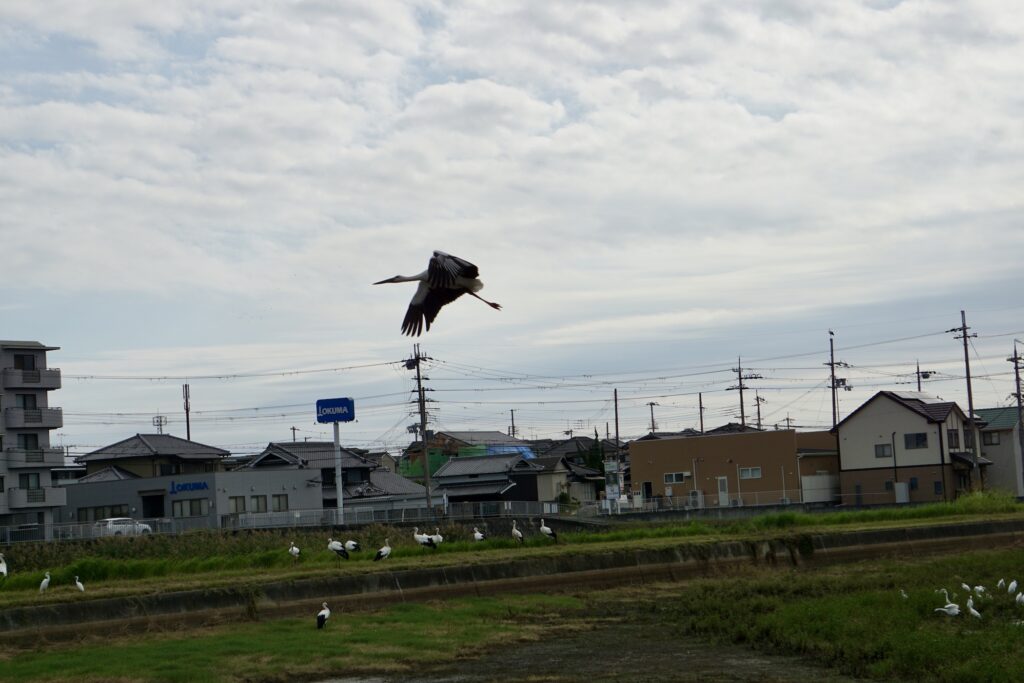
On our way home from dinner last night it appeared as if we were on a flight path for storks. We were near two small ponds and they were landing by the dozen, along with small white egrets.

Stork Flight Path

We had a breakfast of champions of avocado and egg on wholewheat bread. I know it sounds like a week-end breakfast at home. We had purchased the items from the supermarket last night and ate in our room.

We headed out at 8:45. We stopped at one of the two ponds which had a mass of egrets and Japanese storks.

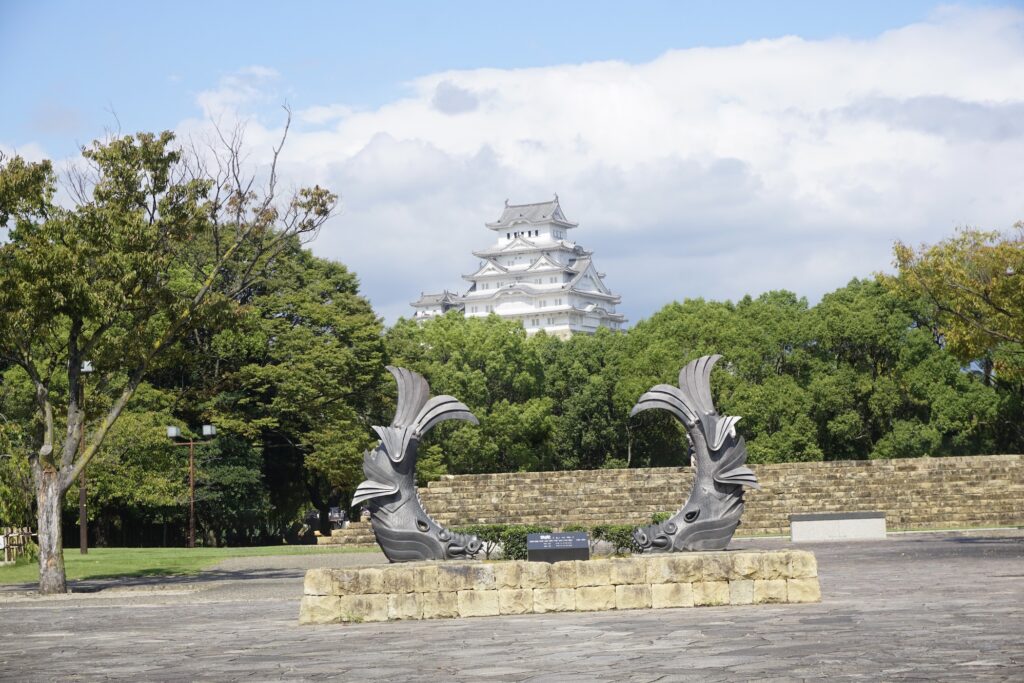
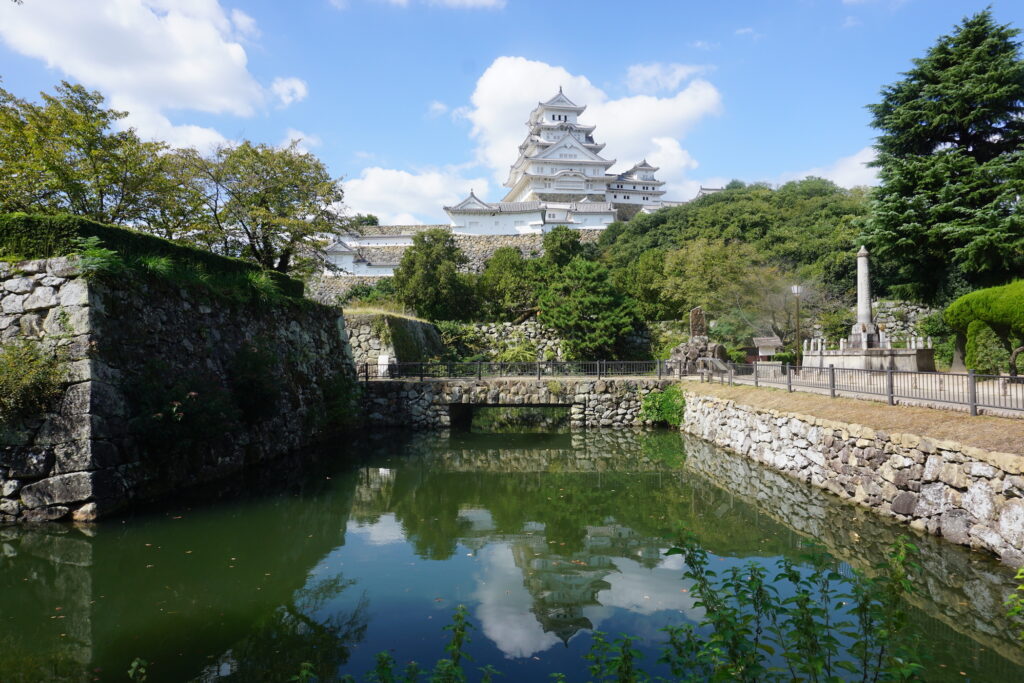
Our route to Himeji was short and we followed either Highway 2 or 250 most of the way. It was not a very exciting route. We stopped at 11:00 for something to eat and then we headed to the Castle at Himeji. This one of five National Treasures.

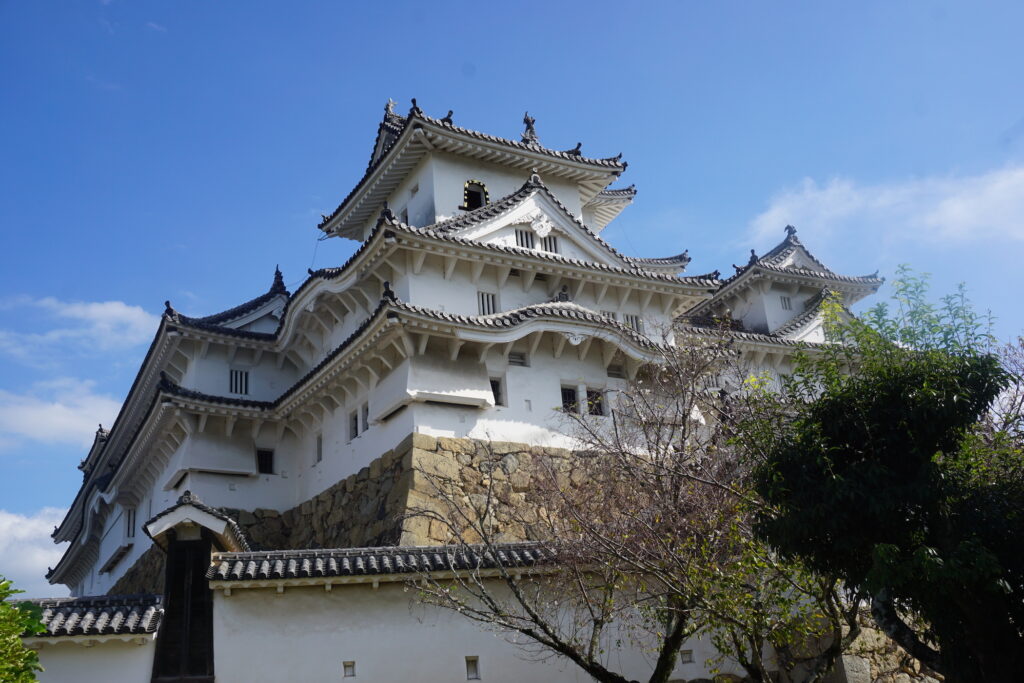
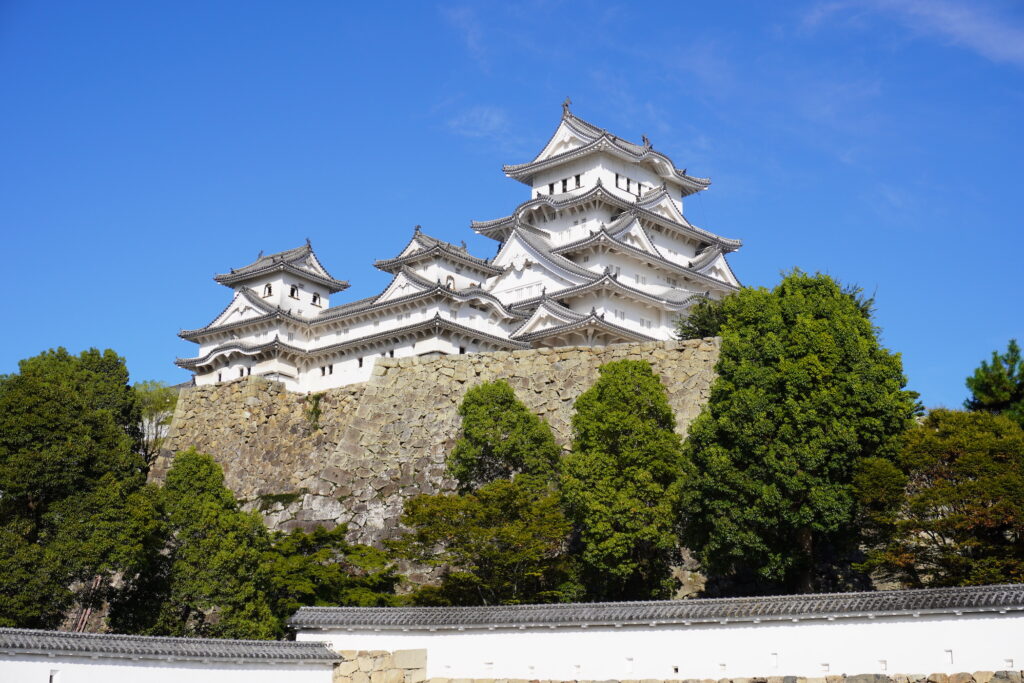
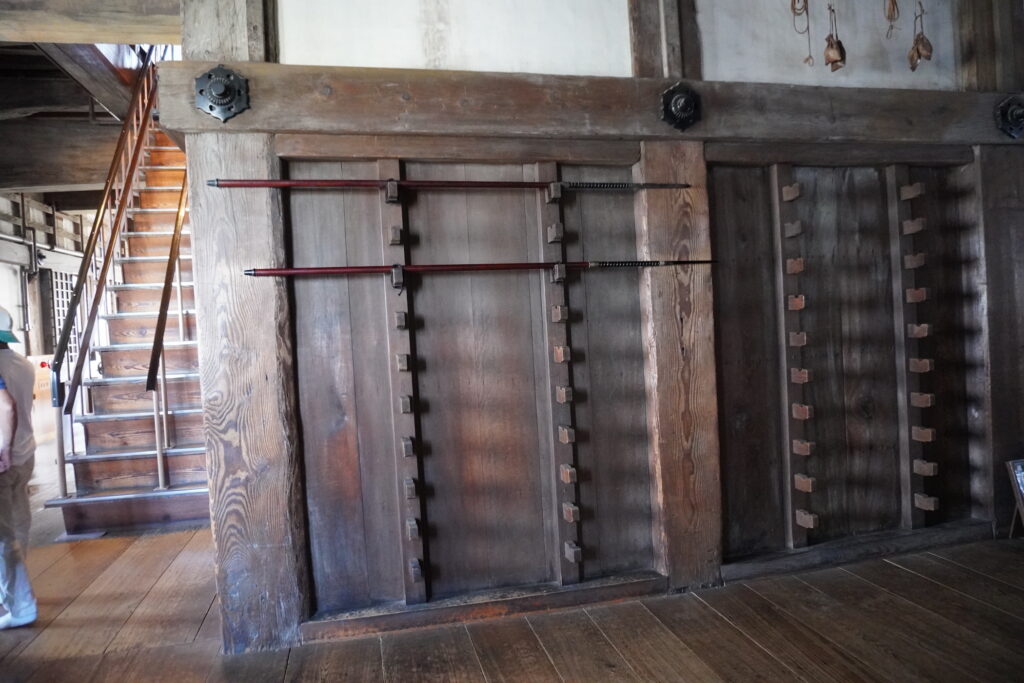
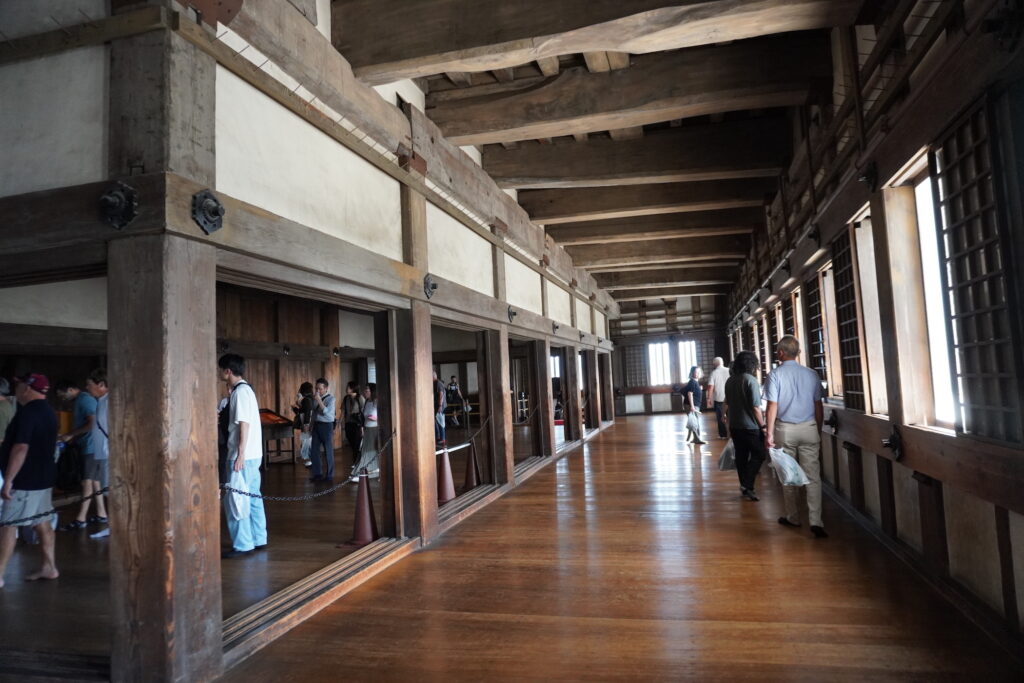
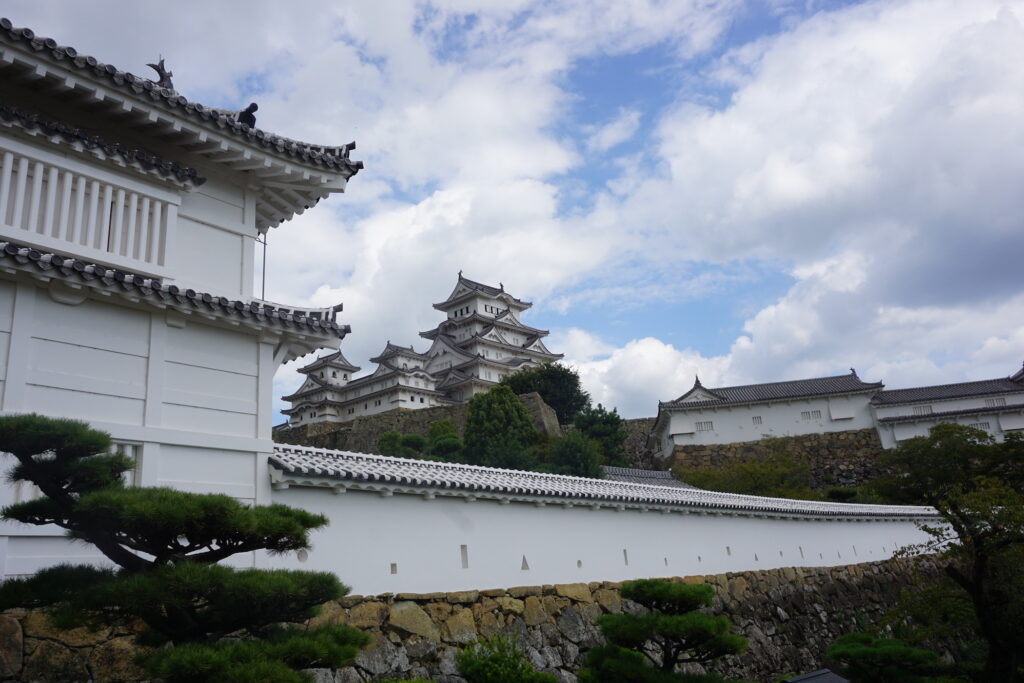
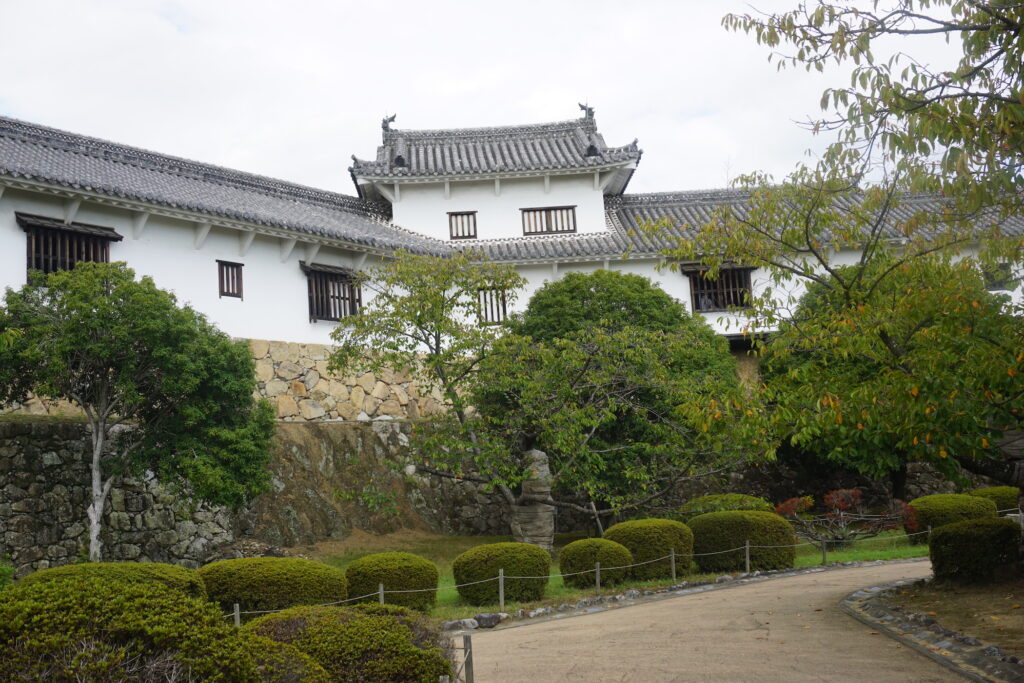
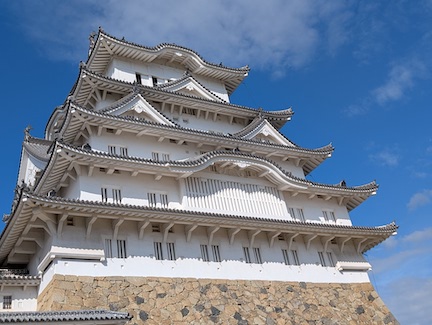
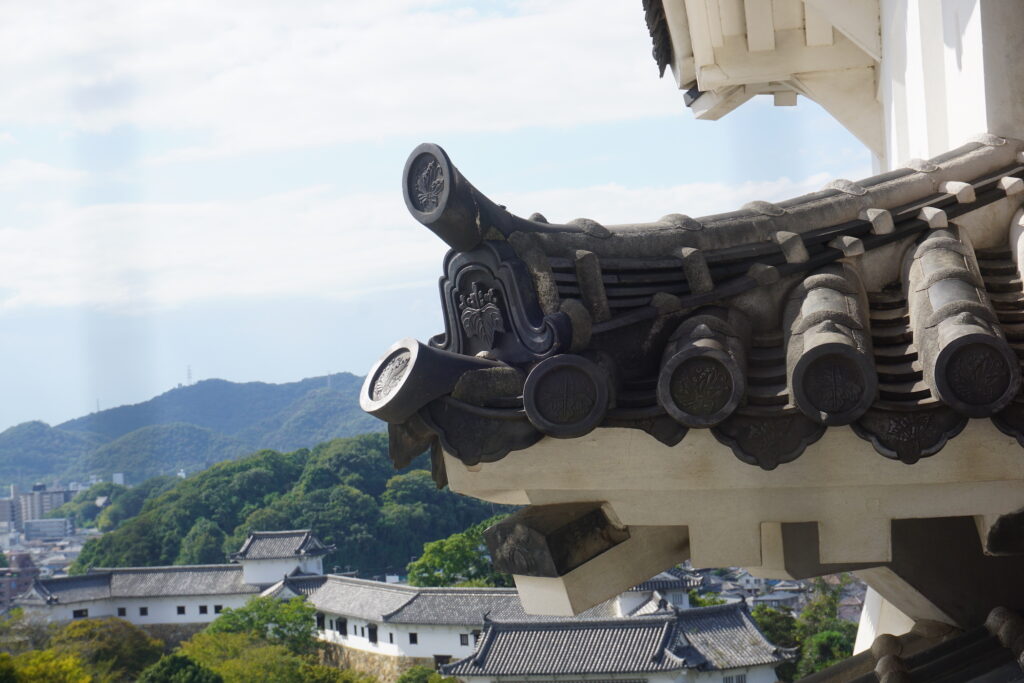
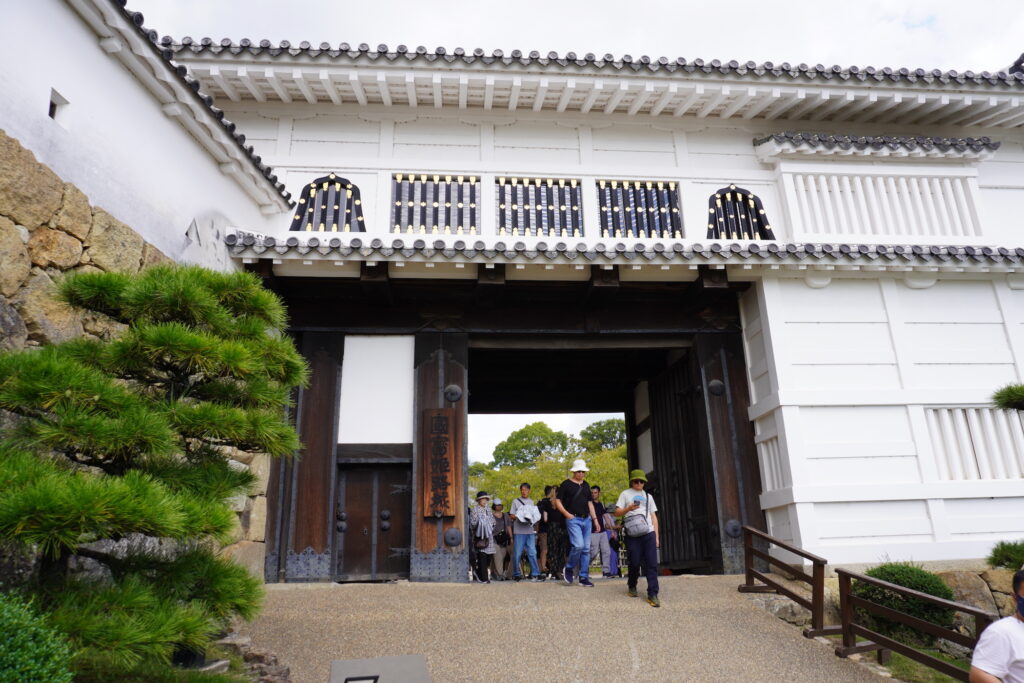
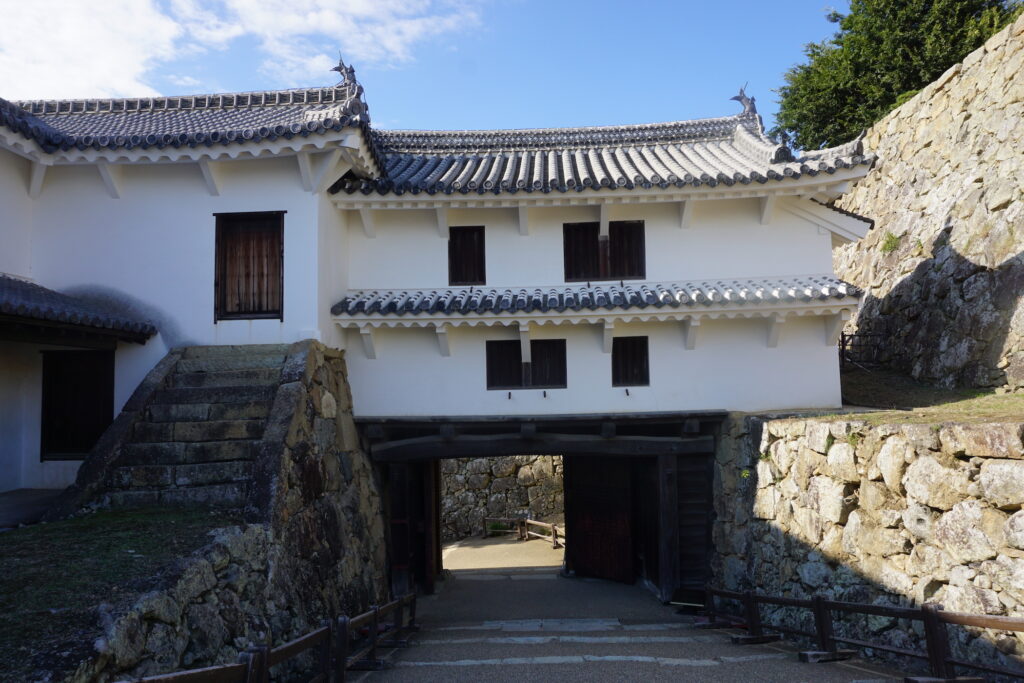
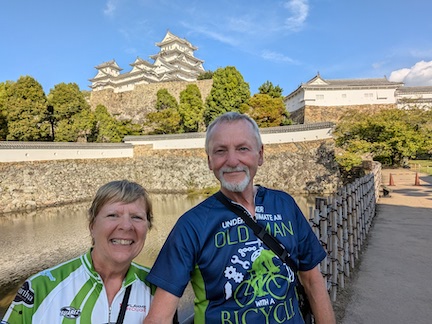
This was the best castle to date. The grounds are extensive and the castle was stunning from the outside. It was very busy with a lot of tourists and school groups. The English information brochure has so much information in it, I had to go through and pick out the pertinent information.

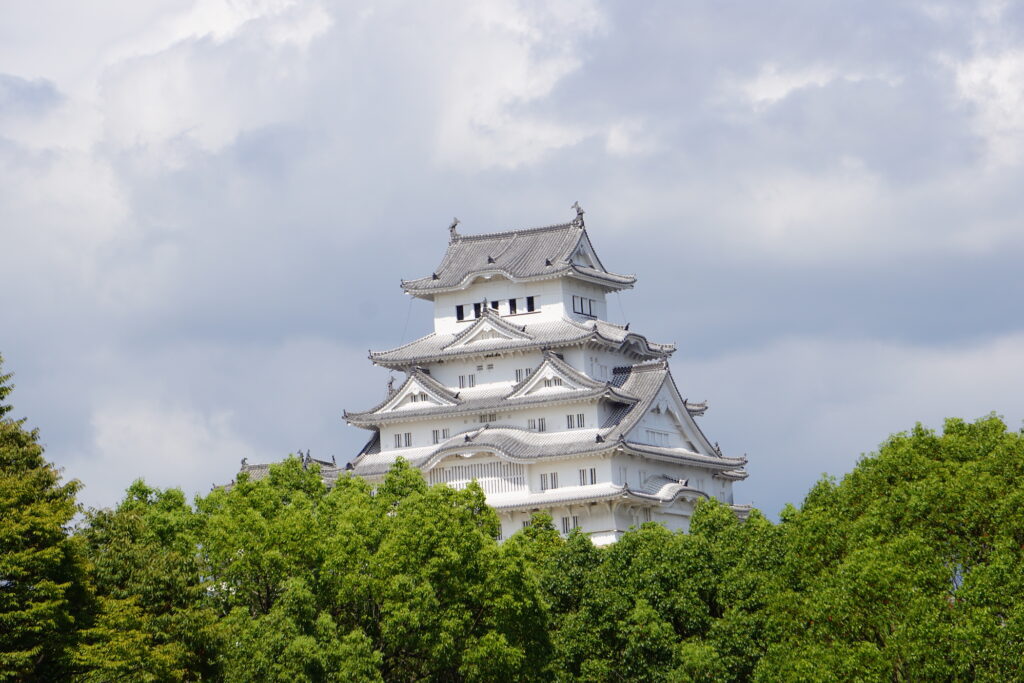
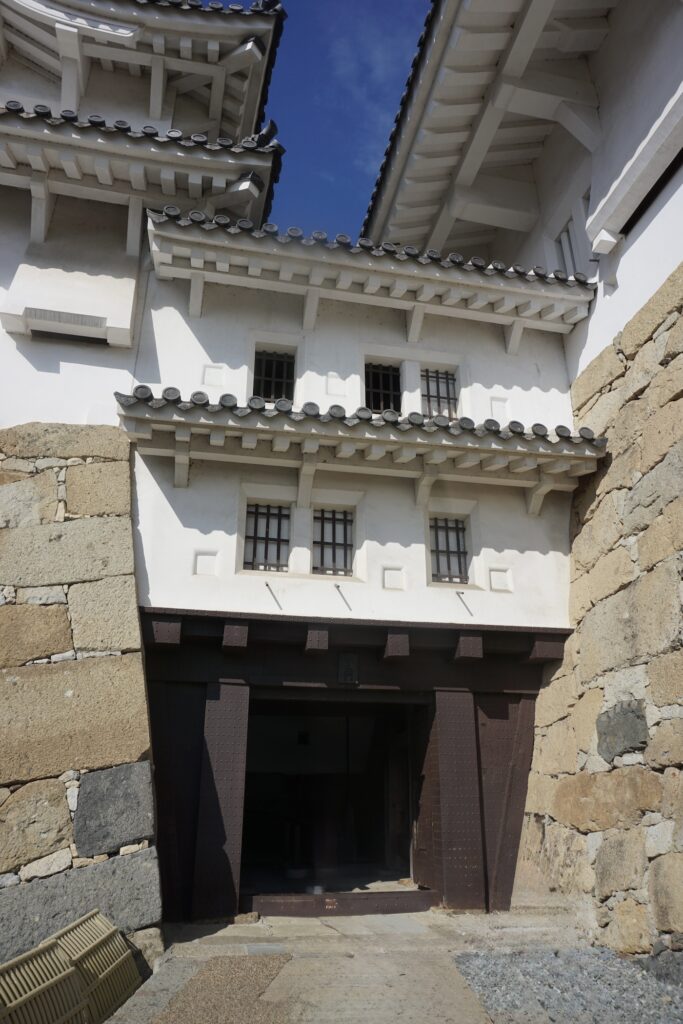
Himeji castle known as the White Heron castle, for its soaring keep and brilliant white plaster walls, it is Japan’s most visited castle. The main keep was built in 1601 and is one of the oldest surviving Castle Keeps in Japan.
Because the castle was never besieged, bombed or burned, more of Himeji’s building have survived to the present date than those of many other Japanese castles. In order to preserve this National Treasure for future visitors the castle’s keeps, gatehouses, and towers have undergone regular restoration since the early 1900’s.

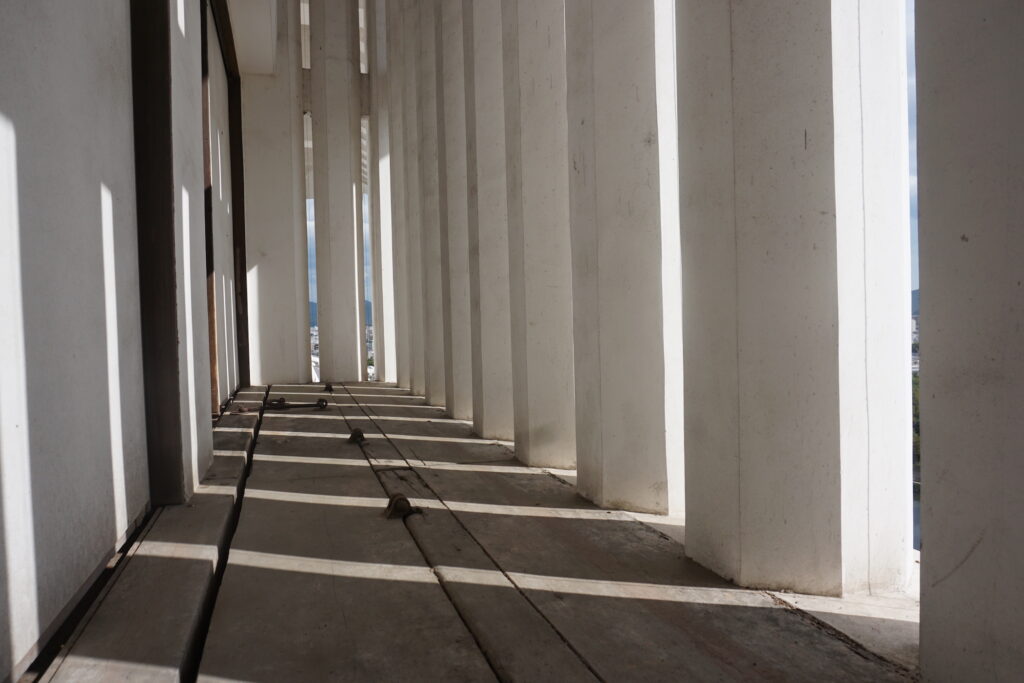
Most of Himeji castles buildings were ostensibly for warfare, try counting the nearly 1000 gun and arrow slits that line the castle walls. But the castle was never attacked, instead the castle functioned mainly as the centre for administration and the home of Himeji’s daimyo.

One part of the castle (the west Bailey – Long Gallery) was dedicated to Princess Sen who was a Grandaughter to the Shogun Tokugawa leyasu (1543-1616). She married the lord to the Honda clan, the lords of Hemiji. Her quarters were extensive, and it was estimated that she had over 100 ladies in waiting.

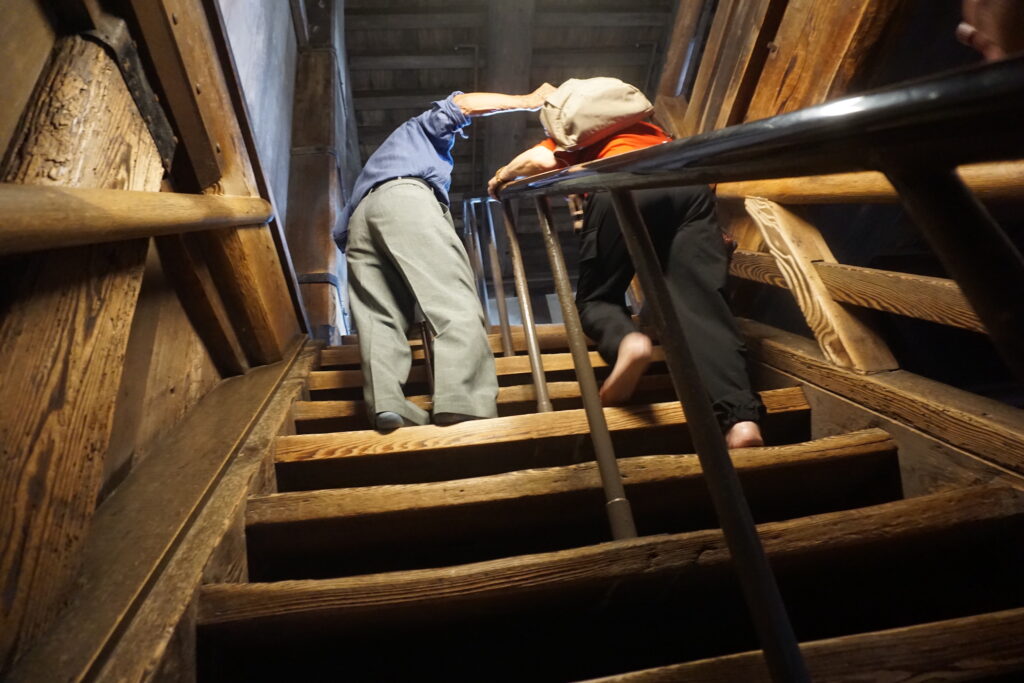
One of the interesting things about the castle was that the visitors were directed in one direction, guided by arrows and the occasional guide preventing you from going back. There was one-way up the stairs and another way down. There was very little congestion.

I had to smile at this older couple. This was about the fourth flight of stairs we had to climb. The older lady was carrying the back-pack and she had a walking stick, her partner had hold of the handle of the back pack giving her a helping hand by lifting the back pack and her, up the stairs.

From one view of the castle it shows the longest bay window of all the castles in Japan. From the inside of the castle the Samarui could shoot arrows from this window.
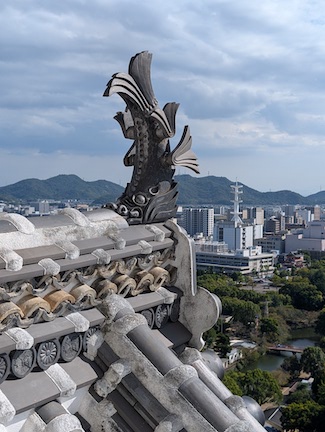
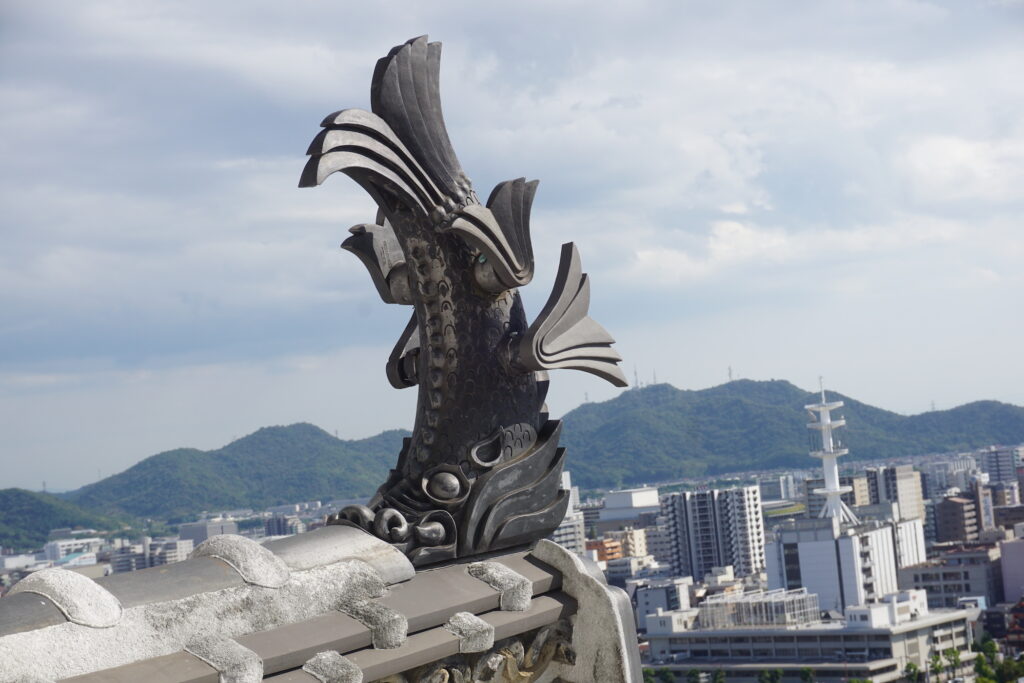
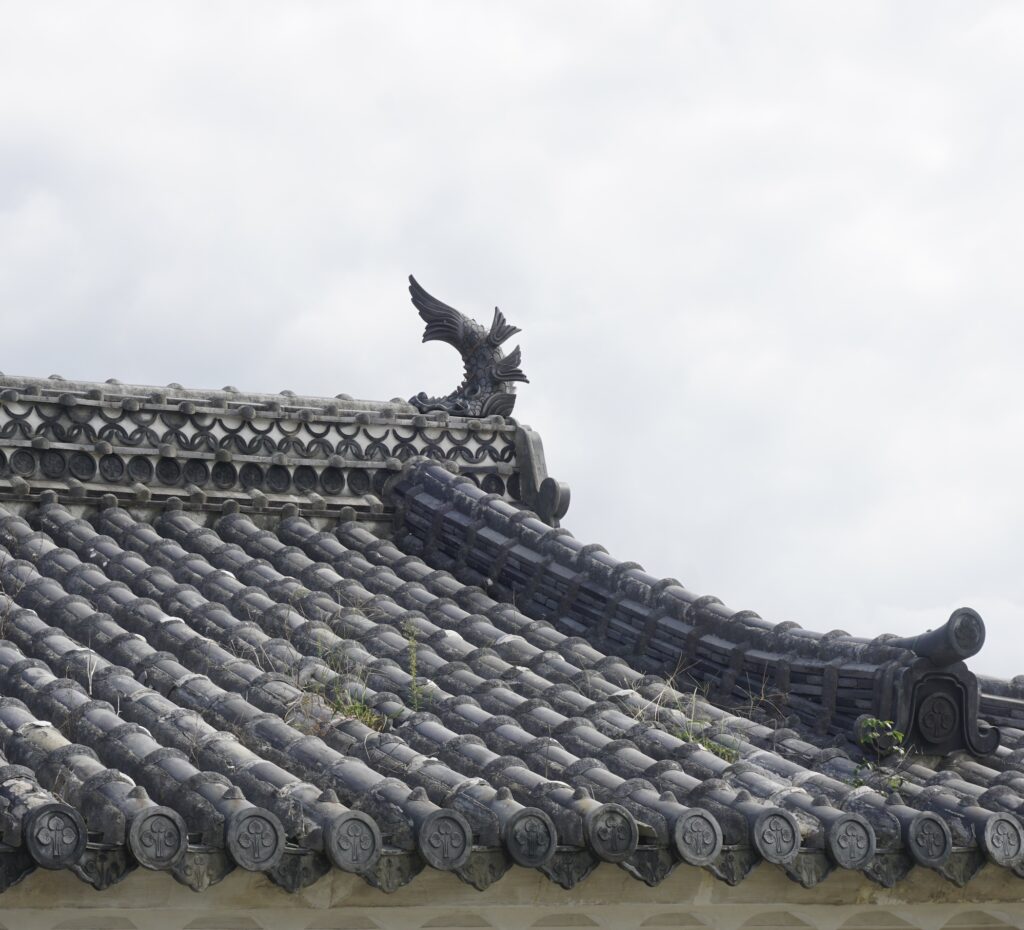
The shachihoko tiles on the roof of the Himeji castle represent mythical fish like features believed to possess the power to ward of fires by spouting water. These decorative figures act as talisman, protecting the castle from theats with Himeji’s being a rare example of all having closed mouths. The fish tiles weighed 250 kgs and 190cms tall.

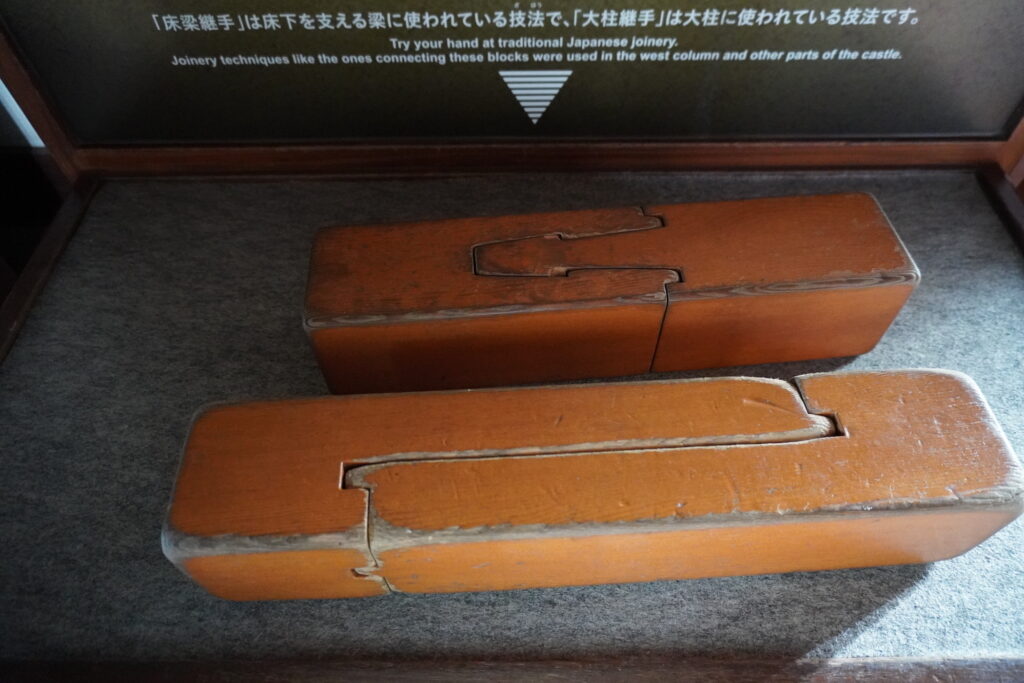
Throughout the castle there was lots of information in English. There were examples of the joinery used in some of the restoration work.

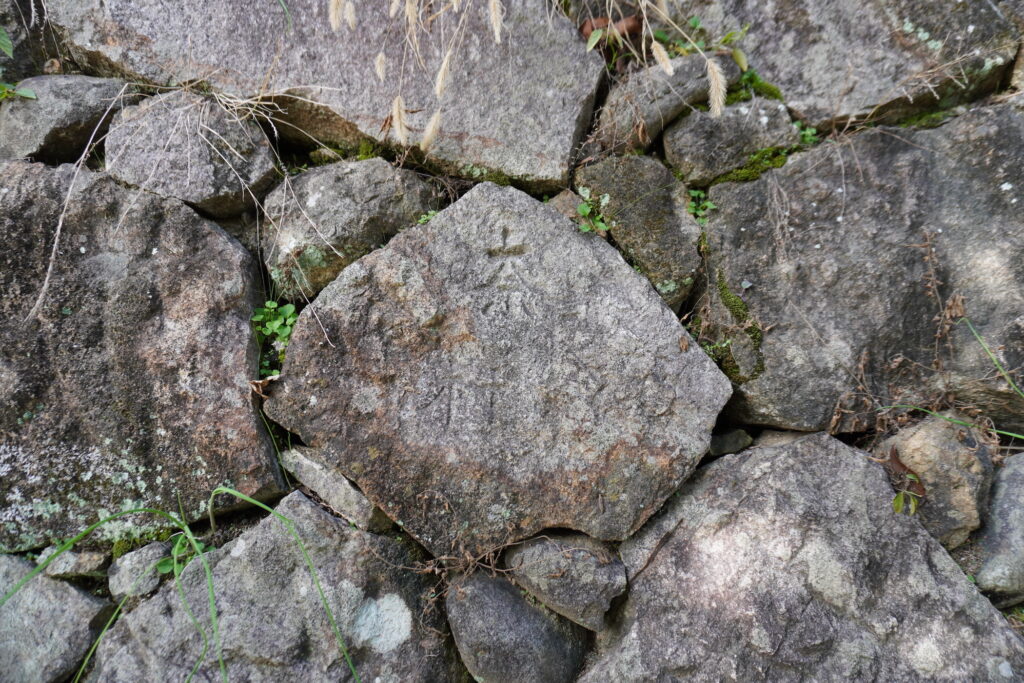
The picture on the right shows some markings. I think they were 1600 century grafitti. The general consensus is that these were markings possibly of where the rocks came from, the stone mason or rocks indicating who donated them.

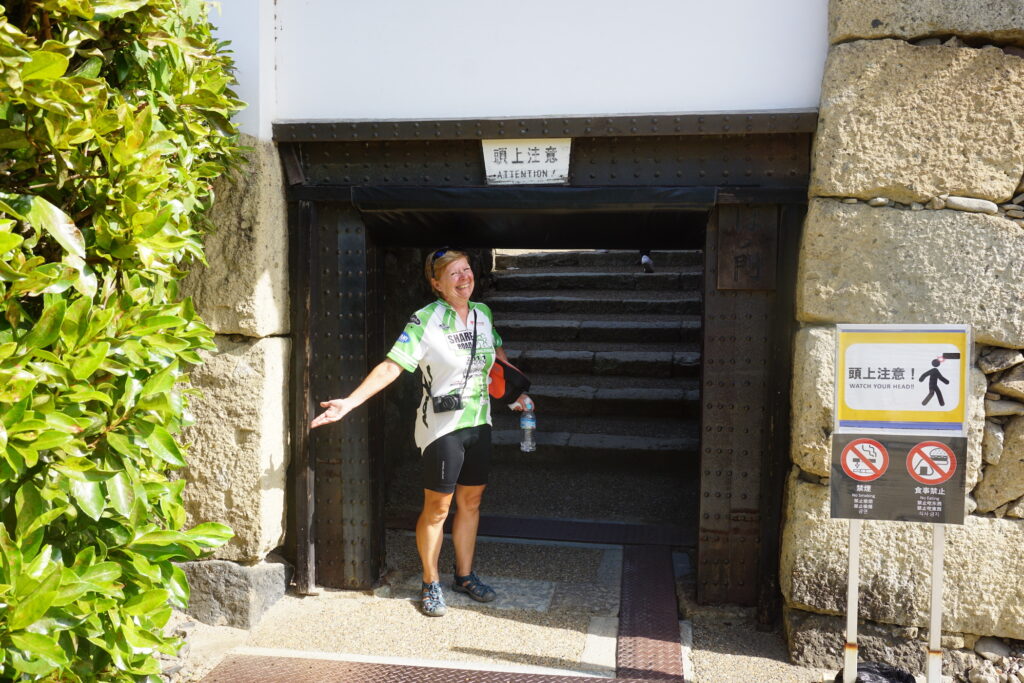
Some areas warned you of low beams, no worries, I didn’t have to duck once.

We spent almost 4 hours at the castle. Then we headed to the hotel which was less than 2 kms from the castle.

Last view of the castle as we left the grounds

We have dinner and breakfast included, the dinner left a lot to be desired but it was filling and we didn’t have to go and search for a restaurant. After dinner we planned the route towards Setouchi and found a reasonably priced hotel in Hisane called the English Club.

I then went to the Onsen. It wasn’t too hot, and I spent about half an hour relaxing.
A good end to a lovely day.

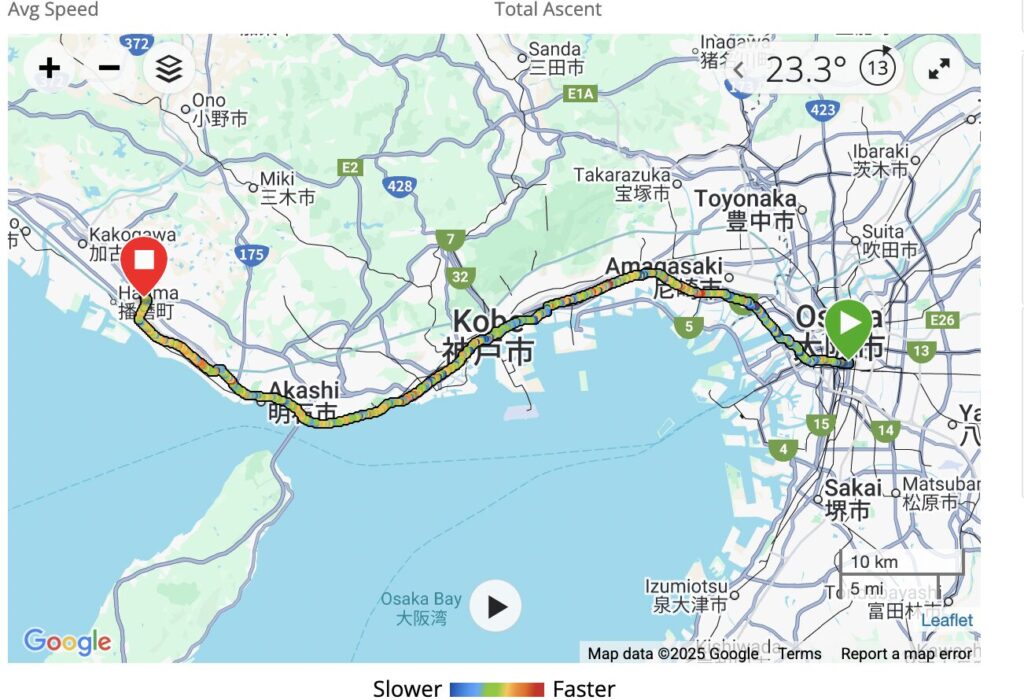
Osaka to Harimi – 71.98

Tuesday October 7, 2025

This was our longest distance cycling in Japan to date. The temperature got up to 31 degrees, however there was a nice breeze and we could find shade for most of the route.

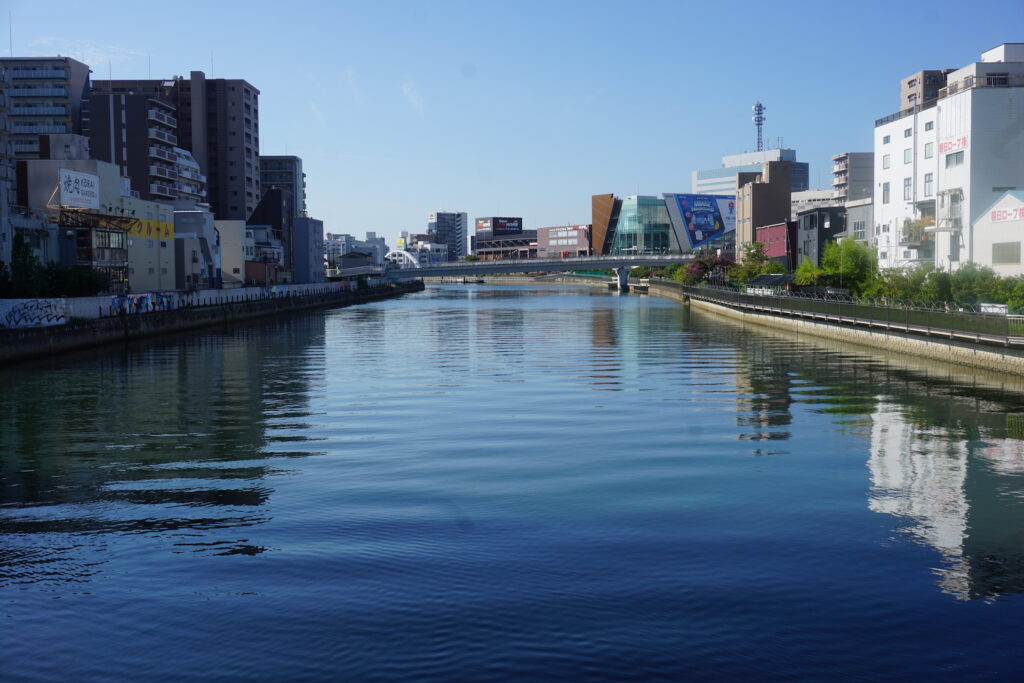
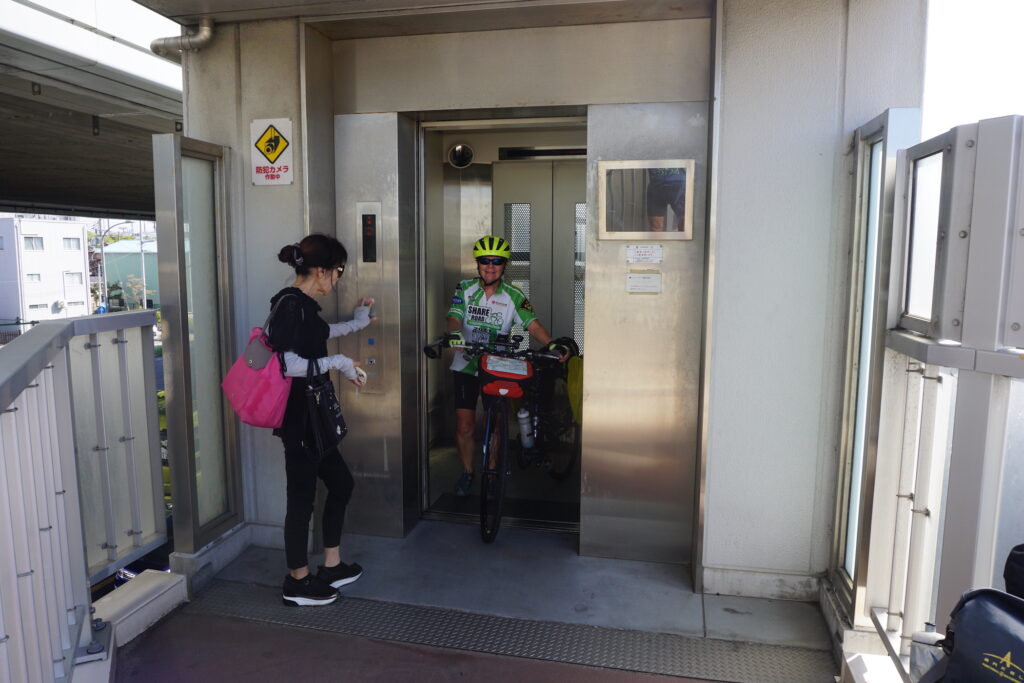
We crossed a lot of bridges today. We went under one river. We came to the river and Ralf said we have to get to the other side, but there was no bridge or apparent way across. We spotted an elevator and the doors opened and 6 cyclists appeared. We joined the queue of other cyclists and entered the elevator. What sorcery is this? The elevator had room for 8 cyclists or 4 regular cyclists and 2 touring cyclists. We didn’t get a photo of this elevator, as soon as the doors opened we were in a tunnel and walking our bikes and other cyclists coming from the opposite direction were moving into the elevator. At the other end of the tunnel another similar elevator was ready to take us up to road level. Magic.

We did find a similar elevator later on the route. However, that had room for only one bike at a time. To be able to wheel your bike into an elevator without having to manhandle the bike, so that it fits on a jaunty angle and wondering if the door will close is bliss. Now that is civilized.

An elevator that is long enough and wide enough for a touring bike

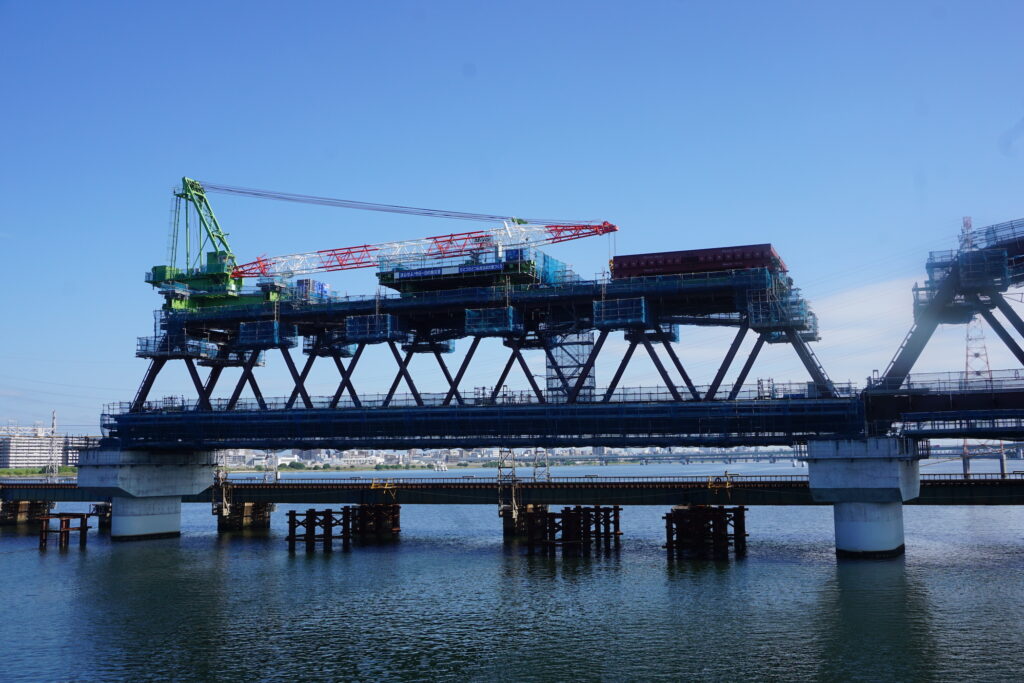
There is a lot of construction happening. We are not sure what they were building here.

It took us about 1 hour 15 minutes to clear the outskirts of Osaka. Then we were very quickly in a very busy Port area, followed by the City of Kobe.

It is hard riding through Cities, there is a lot of starting and stopping, with traffic lights, pedestrian crossings etc. RidewithGPS tries to find us a safe route, which means we are sometimes going down back alleys to avoid one major intersection.

In Kobe RidewithGPS decided to take us down the most expensive shopping street. Prada, Stella McCartney even had a store there. I said to Ralf I would pop into Prada dressed as I was in sweaty cycle gear. Ralf asked if I could afford a paper bag let alone anything else they may have to offer.

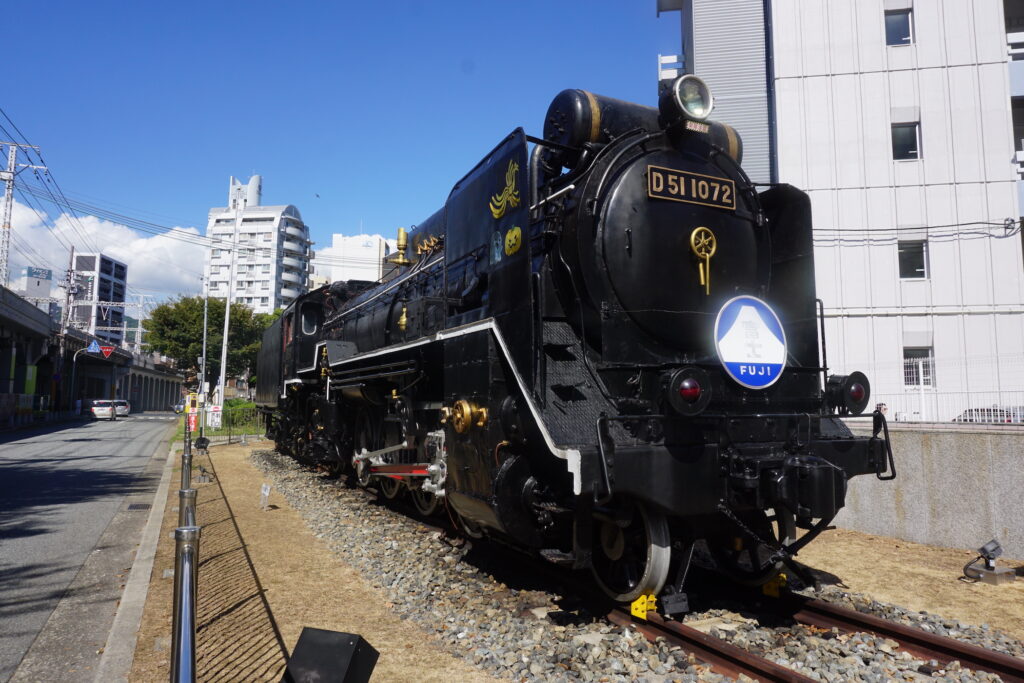
Ralf spends a lot of time trying to read the screen on his garmin and figure out where Ridewith GPS is taking us. I know he likes old trains, he was so concentrated on the route that he missed seeing this train. I stopped and told him to look right. Ralf took about 6 photos of this train.

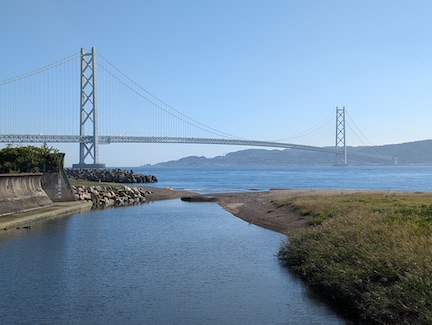
By the time we got to Akashi we had only cycled 40 kms and we had been on the road for 5 hours. I didn’t think we were going to get to the hotel before it got dark. Akashi has a bridge to Awaji Island that resembles the Golden Gate Bridge in San Francisco. The Akashi-Kaikyo bridge is the longest suspension bridge in the world at 3.98 kms and was built in 1998. The bridge was designed with a dual-hinged stiffening girder system, allowing the structure to withstand winds of 286 kilometres per hour (178 mph), earthquakes measuring up to magnitude 8.5, and harsh sea currents. The bridge is a six-lane highway linking Kobe to Akashi Island. No bicycles allowed.

Not the Golden Gate Bridge

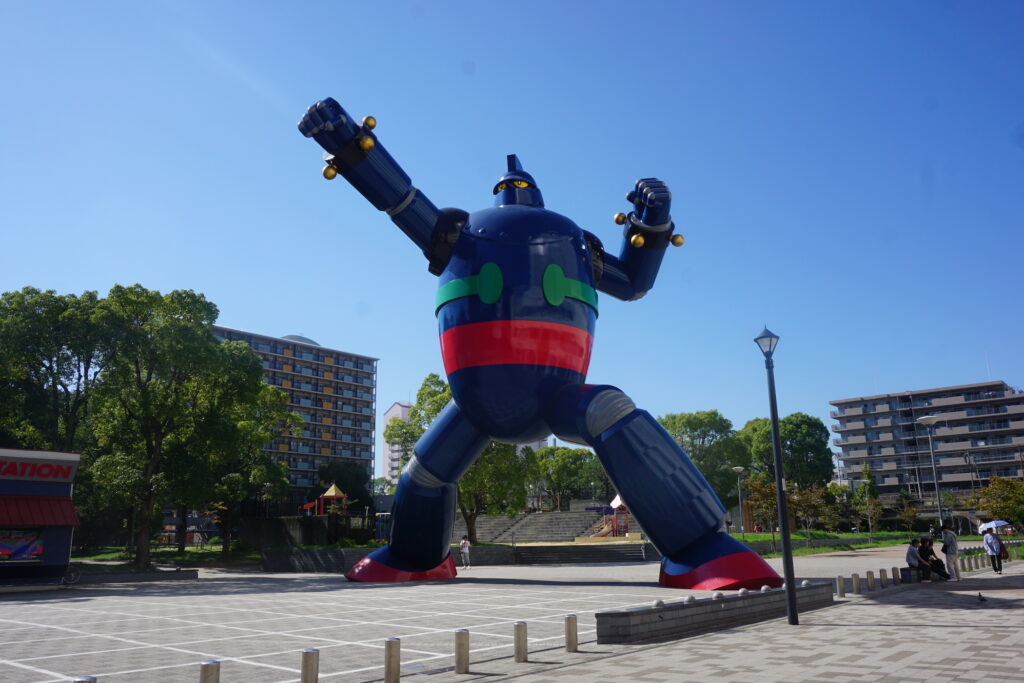
We stopped at this giant Manga figure that was outside a hospital and kids play area. I think the hospital may have been a kids hospital.

Eventually we found Highway 2 and followed it all the way to Harimi. RidewithGPS had a bit of a conniption when we stayed on Highway 2, it kept telling us to turn left. Although Highway 2 was a busy highway, there was a wide sidewalk/cyclepath.

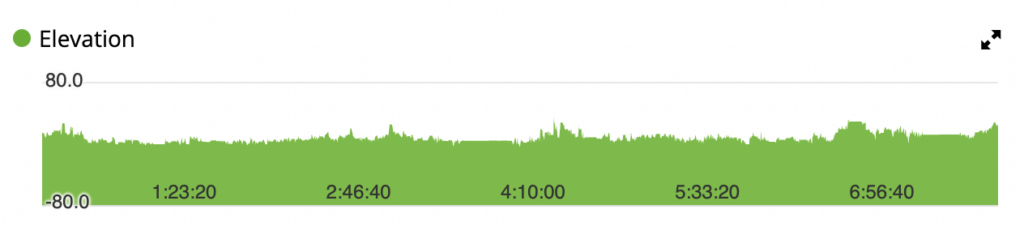
We cycled 40 kms in over 5 hours, and the last 30 kms in 2 hours

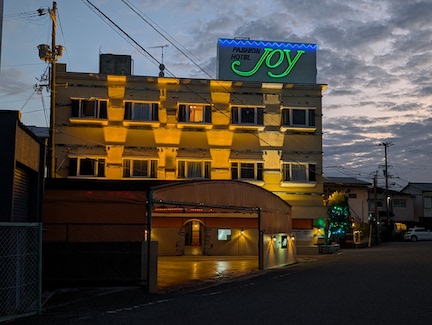
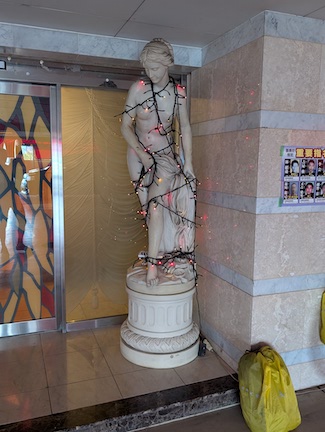
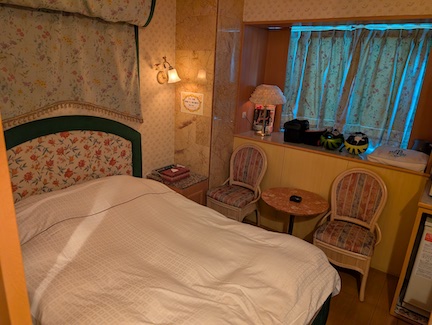
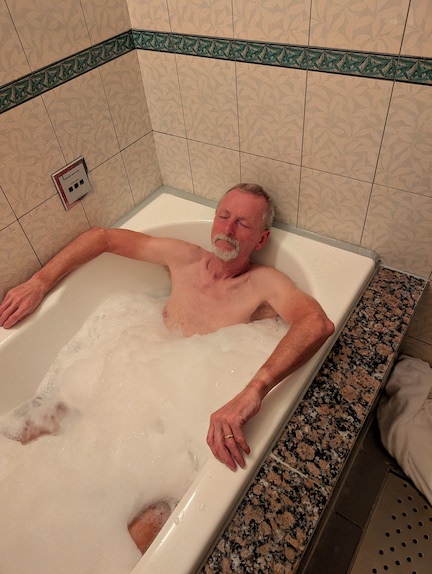
We are over-budget due to high hotel costs in Otsu/Kyoto and Osaka, so we have bottomed out and tonight we are staying in a Love Motel. We stayed at several when we were in South Korea and they were as good as any regular hotel. This is the first love motel in Japan, the room is clean and Ralf had a bubblebath, in the jaccuzi tub. The tell tale signs you are booking a love hotel is the late check-in time, usually 9:00 p.m. and if you are staying consecutive days you have to check-out and check back in the next day, so that they can maximize the use of the room. This hotel allows you to check-in at 4:00, but you pay the nightly rate.

I will wait to have my relaxing bath tomorrow when we are at a hotel with an Onsen.